Showing posts sorted by relevance for query secondhand. Sort by date Show all posts

September 03, 2017

The lure of secondhand books in Mumbai

© Prashant C. Trikannad

Secondhand books are a little like antique furniture. They have a musty but pleasing smell, can carry surprising monetary value, and are much sought after by discerning readers and serious collectors. But just as it is not easy to buy old furniture, it is not always simple to get hold of forgotten and out-of-print books. You have to cultivate relationships with used-booksellers, rather like a news reporter nurturing a source for a scoop or a cop working an informant for a tip on an elusive gangster. Once you have a contact or two in the trade, you can sometimes track down almost any title on your wish list.

I remember nearly every secondhand book or comic-book I have bought over the past three decades, and none of them came easily.

Some years ago, I visited a prominent new-bookstore in South Mumbai to pick up a 1995 edition of DC Comics: Sixty Years of the World's Favourite Comic Book Heroes by Les Daniels, the well-known comic-book historian. The 256-page hardback, described as “The complete story of America’s favourite heroes and their talented and dedicated creators”, was on sale for the price of Rs.450 ($9 at the time). Naturally, I was elated. But I resisted the temptation to buy it. I thought the money could be put to better use and walked away. When it comes to books, however, even a devoted reader has to be practical sometimes.

It was just as well.

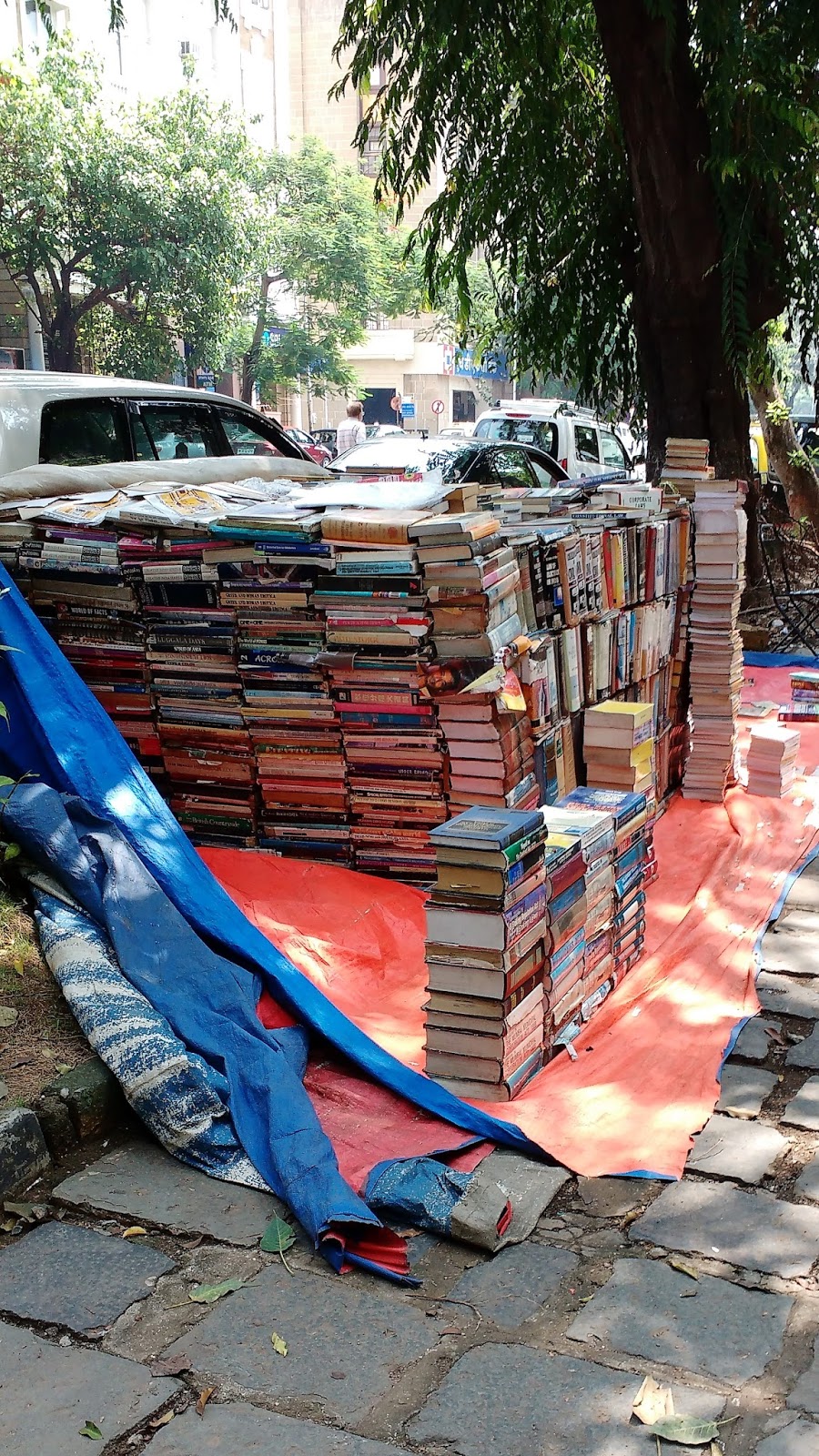
A couple of weeks later, I spotted a near-mint copy of the same volume at a pavement bookseller in the Fort-Fountain area, the central business district about 7 km from the bookstore. It was wedged between a tightly packed stack of academic journals and coffee-table books.

“It’s yours for Rs 150 (a little over $3),” said the bookseller, who knew his books better than I did.

I offered him Rs 100. We finally settled on Rs 125 ($2.5). It was a bargain I would have been a fool to turn down. Of course, it helped that the bookseller had been a “friend” for many years.

Not long after, I stumbled upon a fine—and, for me, rare—copy of The Penguin Book of Comics by Englishmen George Perry and Alan Aldridge, published in 1967. The 272-page volume chronicles the evolution of British and American comic books. While Perry wrote the text, Aldridge designed the cover and illustrations. The book examines the rise and fall of comics in the mid-20th century, in the wake of Fredric Wertham’s Seduction of the Innocent and the Comics Code, as well as the influence of comic strips and comic books on popular culture and on entertainment such as art, films and television.

Until the mid-1990s, booksellers lined the footpaths in that part of South Mumbai. Today, fewer than a dozen remain, thanks largely to eviction drives by the municipal corporation. Interestingly, the civic officer in charge of one such operation left the booksellers alone even as he went after other hawkers in the area. 

“Books are Saraswati,” he told me at the time, referring to the Hindu goddess of learning and knowledge. “I want people to buy and read books." 

Since the turn of the century, many sellers have abandoned books—which few people seem to be reading, let alone buying—for more lucrative goods such as mobile-phone accessories. Book collectors like me have been the losers.

Secondhand books are not as elusive as one might think. You have to keep your eyes open and know where to look. Sometimes they are right under your nose; at other times, you have to sniff them out like a wolf tracking prey. After years of browsing, I can home in on a wanted title like a heat-seeking missile. All it takes is a quick sweep of stacks upon stacks of pavement books, provided the titles are displayed prominently. With practice, book-spotting can become an art.

Some of the most rewarding secondhand-book haunts in my city of approximately 18 million are raddiwalas. These hole-in-the-wall paper marts, scattered across the island city and its extended suburbs, are more than dusty repositories of old newspapers, plastic bottles and assorted junk. You never know what reading treasures you might find there. A few organised paper marts recognise the value of good books and pass them on to professional booksellers, but most stack them near the entrance and sell them cheaply. 

Like an archaeologist digging for bones, I have been prospecting raddiwalas for well over two decades, and with some success. I once bought a dozen rare Phantom and Mandrake comics, published under the Indrajal imprint, from a paper mart close to my home for Rs 10 each ($0.16)—almost as good as free.

The raddiwala clearly did not know their real value. Bennett Coleman & Co. Ltd, publisher of The Times of India, had stopped printing Indrajal Comics in 1990. Since then, booksellers and individual collectors have quoted obscene figures for these comics, which, apart from Lee Falk’s Phantom and Mandrake, included Indian artist Abid Surti’s hero Bahadur (the Brave), Roy Crane’s Buz Sawyer, Allen Saunders’ Kerry Drake and Mike Nomad, Alex Raymond’s Flash Gordon, Rip Kirby and Phil Corrigan, and Steve Dowling’s Garth.

(As an Amazon Associate I earn from qualifying purchases.)

Among the other prized books I bought secondhand were Art Spiegelman’s Maus I and Maus II; the 160-page The Science Fiction Book: An Illustrated History by Franz Rottensteiner; a hardback illustrated edition of Futuredays: A Nineteenth-Century Vision of the Year 2000 by Isaac Asimov; Cows of Our Planet: A Far Side Collection by Gary Larson; Sudden paperbacks by British writer Oliver Strange; a hardback of Nietzsche’s Thus Spoke Zarathustra; Calvin and Hobbes volumes; and dozens of DC and Marvel comics, including pocket-size war and western comic-books.

In the age of Amazon and e-books, the secondhand-book trade is slowly dying. Until it does—though I hope it never does—I will continue to look for elusive and priceless fiction and nonfiction. So far, I have been lucky enough to find a few gems every year. The secret to a productive secondhand-book hunt 
is patience, perseverance and, sometimes, luck—when a wanted title leaps out at you even when you are not looking. Those are the ones I like best.

January 14, 2020

Secondhand Book Finds: Able Team, Louis L’Amour and Sudden

In my first blog post of 2020, I wrote about my poor reading through most of the previous year. That, however, did not stop me from buying more books, some of which I mentioned in that post. Here are three paperbacks—two westerns and a thriller—that I picked up secondhand in 2019. I was especially pleased with Able Team and Sudden, both of which are rare finds where I live.

(As an Amazon Associate I earn from qualifying purchases.)

Ironman is the 19th book in the Able Team action-adventure series written under the pseudonyms authors, G.H. Frost and Dick Stivers. The series—a spinoff of Mack Bolan: The Executioner, created by Don Pendleton—was first published in 1982 by Gold Eagle.

I have been collecting Mack Bolan and its spinoffs—Able Team, Phoenix Force and Stony Man— for nearly a decade and own some 25 novels, including a few written by Pendleton himself. These books take me back to my teens, when I used to read James Hadley Chase, Nick Carter and Perry Mason, many of which are still available in secondhand bookshops in Mumbai.

Synopsis: "Able Team's Carl Lyons travels to the cloud-swept Sierra Madre without his partners and without his weapons. But what was supposed to be well-earned R&R turns into a nightmare of conspiracy and terror when a Fascist international surveillance team identifies Lyons as one of the American specialists who wrecked Unomundo's attempt to seize Guatemala two years earlier."

Carl 'Ironman' Lyons is an old Able Team hand. As a bright LAPD detective, Lyons was tasked with bringing Bolan in—dead or alive; that is, till the Executioner saved his life. Later, he is recruited by Hal Brognola who heads a special organised crime task force.


Western fiction is my favourite genre. I think of Westerns as a blend of several others—crime, mystery, suspense, action, romance, politics, war, and even religion. So I had no hesitation in picking up the Bantam edition of Hanging Woman Creek by Louis L'Amour, another author I read widely in my younger days.

Synopsis: "Barnabus Pike is no gunfighter and not much of a street fighter. Eddie Holt is a black boxer in a white man's world. They've both taken their share of hard knocks. Now they're looking to survive a brutal winter in a remote Montana line shack, collect their pay, and settle down for good. Then they cross paths with a hardworking Irish immigrant and his beautiful, spirited sister, who've been burned off their land. It's a fight Pike and Holt don't want, don't need, and don't dare turn their backs on-especially when one of the perpetrators might be one of Pike's old friends. Hunted like animals across the frozen countryside, Pike and Holt will risk everything-including their reputations, their dreams-and their lives."


If you're familiar with my blog, you'll know how much I enjoy reading the Sudden novels. James Green—better known as Sudden, the Texas outlaw— was created by British writer Oliver Strange, who wrote only ten books. Later, English author Frederick Nolan added five more Sudden novels, including Apache Fighter, under the pseudonym Frederick H. Christian. The original Corgi editions are so rare in India that they sell for hundreds, even thousands of rupees.

Synopsis: "There was a reward of five thousand dollars for the man who could bring Barbara Davis out of Apacheria alive. Every outlaw, gunman, and scalphunter in the south-west had drifted in to Tucson, then out into Apache country, lured by the dream of easy gold. The Apaches killed some of them slowly and horribly; but still they came. Governor Bleke knew unless the girl was brought out soon, he would have a full-scale Indian war on his hands. He sent for the one man who might be able to do it. A tall, slow-drawling man who wore his six-guns tied low and looked as if he knew how to use them. A Texas outlaw on the run: SUDDEN!"

I have been reading these books through different phases of my reading life, and I pick them up whenever I find them in secondhand bookshops and book sales.

October 27, 2012

BOOK BUYS

When good books sell cheap

There is no spectacle that is as terrifying as the sight of a guest in your house whom you catch staring at your books.
— Attributed to Roger Rosenblatt, American journalist, author, playwright and teacher


A couple of days ago, I visited the popular Crossword bookstore located within the sprawling Inorbit Mall in Malad, a northwest suburb of Bombay, and glanced through the wall-to-wall section on fiction. I was looking for the novels of three well-known authors—John le Carré, Tom Clancy and John Irving—and found them jostling for space on a couple of shelves.

While many of their books were there, each priced at Rs.299 ($6), I was looking for specific titles like The Constant Gardener and The Tailor of Panama by le Carré, a few Op Centre novels by Clancy, and The Cider House Rules and A Son of the Circus by Irving. 


I'd no intention of buying any. All I wanted to do was compare their prices with those I'd bought recently from the secondhand bookstore I frequent, like a drunk going into his favourite hooch joint on the dot of six in the evening.

The price difference between the new and used books mentioned above was Rs.279 ($5.60). I bought three of the four novels by le Carré and Irving and a couple of Op Centres by Clancy for a measly Rs.20 each (less than 50 cents), which was as good as free.

All my books were in mint condition and some of the covers were the same as the ones I saw at Crossword. I might as well have bought them from the new bookstore.

The only book I didn't pick up for Rs.20 was A Son of the Circus. That particular novel cost me Rs.100 ($2) at another bookstore in central Bombay. I was poorer by Rs.80 ($1.6) but it was still a good bargain.

This is where I feel for authors, publishers, distributors and sellers who have every right to think they have been ripped off; screwed, in fact.

I know what you're thinking: if you feel so bad about this, then why did you buy the "used" books in the first place? It’s one way of looking at it. 

The Inorbit Mall at Malad in northwest Bombay.

Here’s how I look at it.

I bought the books secondhand because ordinarily I’d never buy them from a new bookstore as I seldom buy new books. I have plenty to read as it were, nearly a hundred used books on last count, not to mention dozens and dozens of copyright-free ebooks, short stories, comic-books, and magazines and anthologies. I have gone from being an earnest reader to a mean hoarder of books.

Two, I cannot afford to pay Rs.299 ($6) and more for each new book by every popular author just because I enjoy their work. I like reading fiction by John le Carré, Tom Clancy and John Irving and would love to read every book they have written. Now how many of their books can I possibly buy? Not many. But I can buy most of their novels for as little as Rs.20 or Rs.50 ($1) and try and read all their books. 

Three, for all my love of books I would be loath to spend money on a new book when I can put it to better use on the home front. There’s always something that needs fixing or replacing. New books can wait. Yet, I do occasionally purchase those I won’t find secondhand; for instance, The Complete Prose of Woody Allen, The Master of Petersburg by J.M. Coetzee, and Flint by Louis L’Amour, a favourite.

Four, a swanky bookstore always leaves me confused. I rarely know what to buy even if a wad of currency is sticking out of my pocket and I can spend it as I like.

I blame it on my ten-year affliction, secondhand books syndrome, and it’s not going to go away soon.

For more Book Buys see under Labels.

July 08, 2017

Book Tag: A Q&A about my reading life

On June 17, my blog friend Tracy did a Book Tag post on her popular blog Bitter Tea and Mystery, answering a series of trivia questions about books and reading. She, in turn, had been inspired by similar book tags on other blogs. I found her version particularly enjoyable, not least because of the sheer variety of books she has read—and continues to read and review—across several genres.

(As an Amazon Associate, I earn from qualifying purchases.)

No reader ever reaches the end of the journey. I still have countless authors to discover, shelves of books waiting to be read, and many years, I hope, before I can look back with any sense of satisfaction. So I'm going to answer these questions honestly. Is there any other way? To adapt a famous line from Kurt Vonnegut's 1961 novel Mother Night—“We are what we read, so we must be careful about what we pretend to read and the books we pretend to talk about.”

Let’s see how it goes.

Shakespeare: Complete Works
What book has been on your shelf the longest?

My paternal grandfather's 1965 Tudor edition of Shakespeare: Complete Works (The English Library). I'm saving it for retirement, though I suspect the Bard will have plenty of company by then. Every other year I tell myself I'll finally settle down and read Shakespeare properly. Instead, I end up dusting the cover, the spine and the yellowing pages before placing it carefully back in the cabinet.


Shall We Tell the President? by Jeffrey Archer book cover
What is your current read, last read, and the book you plan to read next?

Current Read: The Midden by British satirical novelist Tom Sharpe (one of my favourite writers) and Shall We Tell the President?, an alternative fiction by Jeffrey Archer, one of several bestselling authors I read in college. 
I enjoy Sharpe's irreverent wit and outrageous humour. Archer, on the other hand, is an old hand at storytelling. Remember Kane and Abel?

Last Read: Past Tense, where prolific writer-blogger Margot Kinger introduced me to her affable sleuth Joel Williams, a former policeman turned academician.

Next Read: To be honest, I have no idea. My next book is usually a random choice, though I'm tempted to pick up a P.G. Wodehouse or an Agatha Christie from my wife’s collection. 
It's been a while since I last read either. Wodehouse still has me in splits, even if his humour occasionally follows familiar patterns.

The Sound and the Fury by William Faulkner book cover
What book do you tell yourself you’ll read, but probably won't?

I'm going to answer this one a little differently.

I struggled through the first 30-odd pages of William Faulkner’s The Sound and the Fury and nearly gave up. I had little idea what was happening. It remains one of the most challenging books I have attempted in recent years. At times it almost felt as though Faulkner himself was saying, "My narrative style isn't for you. Read something else." I wasn't amused.

What book are you saving for retirement?

Well, as I said, Shakespeare will probably have distinguished company: Dostoyevsky, Tolstoy, Gogol, Solzhenitsyn, The Rise and Fall of the Third Reich by William L. Shirer, Thus Spoke Zarathustra by Friedrich Nietzsche (which I never finished), and a few other classics. Of course, much will depend on my eyesight and state of mind.

Sudden: The Marshal of Lawless by Oliver Strange book cover
Which book character would you switch places with?
 
James Green, better known as Sudden, the Texas outlaw. I've admired the character ever since my paternal uncle introduced me to the eponymous western series when I was 14.

Created by British writer Oliver Strange, Sudden is my favourite Western hero. He earns both his nickname and his notoriety because of his lightning-fast draw, and is branded an outlaw for crimes he never committed. In reality, Green is a gentleman with a gun, defending ordinary folk against crooked gamblers, ranchers, rustlers and land-grabbers, even as he quietly hunts down the two men who killed the man who raised him. Sudden also has a badge—and a secret identity: Deputy Marshal of the United States, reporting directly to the Governor of Arizona.

While Strange, who never once travelled to America, wrote ten Sudden novels, 
fellow English writer Frederick H. Christian (better known as Frederick Nolan) added another five after Strange's death. You can hardly tell the difference. This remains the only series, in any genre, that I have read more than once.

Love Never Faileth by Eknath Easwaran book cover
What book reminds you of a specific place, time or person?

I'm usually so engrossed in a book that I rarely relate its plot, setting or characters to real places or people. It simply doesn't occur to me.


Which book has been with you most places?

Quite a few spiritual books, but mostly Love Never Faileth by the late Indian spiritual teacher and author Eknath Easwaran
who founded the nonprofit Blue Mountain Center of Meditation in California in 1961. This, and most of Easwaran's forty books, offers a practical guide to leading a more fulfilling life through his simple eight-point programme of passage meditation. You can open almost any page and think, "Hey, this is exactly what I needed."

Which book have you reread the most?

The books I have reread most often are philosophical and spiritual, particularly those by Easwaran and other mystics, including my own spiritual preceptor. They have been my comfort zone—my mental prop—for more than three decades.


(As an Amazon Associate, I earn from qualifying purchases.)

What book outside your comfort zone did you end up loving?

Not one, but two: The Mayor of Casterbridge and Jude the Obscure by Thomas Hardy. I read these powerful classics more than a decade ago on my wife's recommendation. Until then, I had never read an unabridged classic, apart from the abridged versions we encountered in school.

What are your three bookish confessions?

 
1. I collect books. I still own several unread books that I bought in the 1980s and 1990s. Having said that, I have been exercising some restraint. So far this year, I have bought just three books.

2. I will happily miss a bus, train or autorickshaw if I spot secondhand books for sale, even if I end up buying nothing and reaching home late.

3. I never lend books I treasure, such as my Corgi editions of the Sudden novels and my comic-books.


The Executioner: Death Load by Don Pendleton book cover
Do you prefer used or brand new books?
 
There is a certain charm about secondhand books, which make up most of my modest collection. This includes over two dozen secondhand—but mint-condition—paperbacks of Don Pendleton’s Mack Bolan: The Executioner
As for new books, I now buy more Kindle editions than paperbacks.

Have you ever seen a movie you liked more than the book?


Perhaps not more than the books themselves, but I thoroughly enjoyed the film adaptations of Jack Higgins' The Eagle Has Landed and A Prayer for the Dying, and Alistair MacLean's The Guns of Navarone, Where Eagles Dare and Ice Station Zebra. I also liked the screen versions of Harper Lee’s To Kill A Mockingbird, John Ball’s In the Heat of the Night, and, of course, 
the Harry Potter films.

Last page: read it first, or wait till the end

I've never read the last page first
—not even to finish a book sooner—although I was tempted while reading Irving Wallace’s The Second Lady. If you’ve read the book, you’ll know why.

DC Comics: Sixty Years of the World's Favorite Comic Book Heroes by Les Daniels book cover
Name a book that you acquired in an interesting way.

DC Comics: Sixty Years of the World's Favorite Comic Book Heroes (Bulfinch, October 1995).

Many years ago, I found this collector's edition at a new bookstore for Rs 450 ($9). I wanted it badly. But wisdom prevailed, and I walked away, convincing myself the money could be put to better use—perhaps on groceries and things like that.

A few days later, while on my way to the office in another part of town, I spotted the very same book at a roadside bookseller. It was in mint condition and priced at just Rs 125 ($2.5). I bought it without a second thought.

Final two questions, my own.


Which authors you wish you had read by now?

Most Indian authors. There is such richness and variety in Indian writing in English that I often wonder why I have neglected it for so long. In hindsight, the focus of my blog should probably have been more desi than Western. I hope to make up for that by reading—and reviewing—more Indian fiction in the years ahead.

If you didn’t read books, what would you be doing?

Probably painting or learning to play a musical instrument. I think it's important to have non-work pursuits among the arts and crafts. Much of everything else is so ordinary.


Bottom line: 
If these answers reveal anything, I hope it's not how many books I have—or haven't—read, but the kind of reader I am. There are still countless books waiting for me, and that's part of the pleasure. Reading isn't a race. The important thing is simply to keep reading, even if it's one book at a time.

Other notable Book Tag posts
 
Nancy Elin 

Brona's Books

On Bookes

Howling Frog Books

May 26, 2013

BOOK BUYS

Readings from the raddiwala


Some of the best books and comics in my collection have come from the ubiquitous raddiwala, but more about that later.

The raddiwala is roughly an old paper mart or a scrap dealer whose main business is to buy old newspapers, magazines, and books from residential and commercial premises. He also buys all kinds of other used stuff that you no longer use, like faucets, stoves, copper wires, utensils, and iron pipes, to give you an idea. Most of these items are recycled and at some point find their way back into your home, as brand new items. You wouldn’t know.

Mumbai recycles everything, even school notebooks and textbooks after your kid has passed out of an academic year, an annual ritual. The city has become one big recycle bin.
 

The raddiwala usually operates from a small shop often wedged between bigger shops on either side, selling fancier stuff. Like the omnipresent paanwala (betel leaf and tobacco seller), the raddiwala is found in all lanes and bylanes of Mumbai, as he is in every part of the country. His shop is easily distinguishable by the row of magazines and plastic containers hung from the corrugated iron roof. The raddiwala sits on a flat cushion or a wooden bench in front of a pair of weighing scales and a room lined with heaps of old newspapers. He usually lives in the hole in the wall, with his wife and kids.

The raddiwala is an important part of the commercial milieu of Mumbai. He comes from a poor background, mostly from the northern Hindi speaking belt of the country, but he can be enterprising too. He often deals in old newspapers and new mobiles at the same time and he may also have a chain of raddi shops across the city.


The current rate for old newspapers and magazines is Rs.9-10 per kg (less than 25 cents). It varies according to the ‘going’ price in the recycle market. The raddiwala weighs your old papers, calculates, and pays you cash on the spot. No questions asked. 

Most houses in Mumbai prefer to call the raddiwala home. He comes over to your place on his bicycle with a dirty sack and portable weighing scales in tow. He ties up your old newspapers into a neat bundle, hooks it up to the scales, and turns it towards the light so you can see the reading and calculate, lest you feel you’re being cheated. The exchange of paper for money is usually preceded by a little haggling over the price offered or the reading of the scales or both.

In Mumbai, people cultivate their raddiwala in the same way they cultivate their barber, grocer, vegetable vendor, and tailor. You seldom go elsewhere. The more you buy from the same place, the better the bargain and treatment you’ll get.

The raddiwala has been my favourite haunt for secondhand books for many years, though they’re much smarter nowadays, selling the used novels they get in their raddi to professional secondhand book dealers who know their value as well as you do.


Nonetheless, I have bought some fine books and comics from raddiwalas in the past. My most memorable acquisition from the raddiwala was half-a-dozen vintage Phantom and Mandrake comics under the erstwhile Indrajal imprint published by Bennett Coleman & Co. Ltd, owners of The Times of India. I bought them for Rs.50 ($1) only to have them eaten by termite a few months later.

Three purchases from the raddiwala I cherish are the 160-page The Science Fiction Book: An Illustrated History by Franz Rottensteiner, a hardback illustrated edition of Futuredays: A Nineteenth-Century Vision of the Year 2000 by Isaac Asimov, and Cows of Our Planet: A Far Side Collection by Gary Larson. They cost a pittance.

On the face of it, these books may not seem much. They do when you buy them from the raddiwala.

September 02, 2010

Hey presto! The Indrajals are gone

Indrajal comics, long out of print, are making a comeback in Bombay and probably elsewhere in India. No, Bennett, Coleman & Co. Ltd, the publishers of The Times of India which brought out the 800-odd comics from March 1964 through April 1990, is not reintroducing them.

Rather, what has revived interest in Indrajal—led by its flagship heroes Phantom, Mandrake, Bahadur and Flash Gordon and to a lesser extent Rip Kirby, Buz Sawyer, Garth, Mike Nomad, Kerry Drake, Phil Corrigan and Dara—is a spate of stories in newspapers and on internet about how old issues of these comics are hard to find, how their value has skyrocketed, and how tradition-bound collectors (like this writer) are on a never-ending hunt for this elusive treasure.

A little over a decade ago, secondhand Indrajals were available everywhere in Bombay—on broken pavements, in circulating libraries, and at old paper marts. Well, they still are but you will have to look long and hard and if you are lucky you might just come away with a few near-mint, dog-eared and yellowed issues for anywhere between Rs 30 to Rs 80 apiece (around 60 cents to $1.65). They are worth the money considering that some of these comics are up for sale on auction sites at obscene bid amounts starting from Rs 400 ($8) to Rs 50,000 ($1,021) and more.

But, comic book collectors and aficionados don’t usually sell; they hoard until they are old and ready to pass on their carefully nurtured “wealth” to the next generation. This is true of all pursuits, serious and pastime, be it stamps, coins, music albums, picture postcards or model ships.

Coming back to the city’s vanishing comic book haunts, the stretch of pavement between Churchgate station and Hutatma Chowk (or Flora Fountain) in the central business district of south Bombay used to be a most lucrative place for all kinds of books and comics. No one returned empty-handed. You cultivated friendships with a handful of sellers who, over a period of time, knew your wish list better than you. So impressive was their knowledge of books that they might as well be employed as librarians.

The footpath was home to dozens of book sellers for dozens of years until one day the civic administration drove them out to clear the pathway for office goers. Some years later I managed to trace four of the book vendors and they were operating from different locations in the city; they told me business had never been the same since they were forced to move out. They didn’t know where the rest of the tribe was. The Municipal Corporation of Greater Mumbai, the richest civic body in India, promised an alternate site in south Bombay but is yet to give them one.

With the Churchgate-Fountain stretch out of bounds for comic book lovers, the city’s only remaining secondhand literary haunt is the pavement around Maheshwari Udyan (King’s Circle Garden) in central Bombay, which has been spared the broom. If you don’t find Indrajal here then try the local library and the old paper mart. You might get lucky. And if you do, don’t tell no one.

September 15, 2011

Good books, 
cheap buys

1. It's Been A Piece Of Cake: A tribute to my favourite test cricketers by Brian Johnston

2. Pagan Babies by Elmore Leonard

3. The Spanish Gardener by A.J. Cronin

4. The Chinese Assassin by Anthony Grey

5. The Red Badge of Courage by Stephen Crane

6. The Eagle Has Landed by Jack Higgins

7. The 158-Pound Marriage by John Irving

8. Death Load (Mack Bolan: The Executioner #150) by Don Pendleton

9. The Tailor of Panama by John Le Carre

10. Snow Falcon by Craig Thomas


Do you know what is common among these ten books that have nothing in common? Ignore the order. They were all purchased for Rs.20 each, about 50 cents apiece, from a small bookstore in a northern suburb of Bombay, the financial capital of India. The paperbacks are secondhand but you wouldn't know looking at them. They are in near-mint condition. I picked them up randomly from a stack of used books over a period of three months. 

Over the past few years I've had the good fortune of buying dozens of pretty good books from this little-known bookshop — by authors as diverse as Louis L'Amour, Wayne D. Overholser and Frank C. Robertson (western); John le Carré, Craig Thomas, Jack Higgins and Leon Uris (thriller); Carter Brown, Don Pendleton, Nick Carter and Edgar Rice Burroughs (pulp fiction); John Irving, Kurt Vonnegut and Joseph Heller (popular fiction); and Erma Bombeck (humour), to name very few. All for 50 cents each.

Now there is nothing to get excited about a bargain like this, especially for a reader or collector in the western world. But here in India if you find these books, and find them cheap, you've won yourself a lottery. Many of the books I mentioned are no longer available in new bookstores. 

I often resist buying a new book if I have a hunch that I'll find it someday in a secondhand bookshop, and I usually trust my hunches. They have never let me down. Besides, I get a thrill out of discovering a rare or good book tucked away somewhere in a dust-filled pile of other books.

So then, from the assortment of ten books the only one I've not read yet is The Red Badge of Courage by Stephen Crane — one of many classics in my collection I should have read a long time ago. After all, Crane did write it 116 years ago, didn't he? He deserves more respect.

April 12, 2016

A Coin for the Hangman by Ralph Spurrier, 2016

"Hello Ralph. You still mucking about with books?"

This is only an introduction to A Coin for the Hangman, the debut novel of Ralph Spurrier. I read about it online.

The 68-year-old new crime fiction writer is elated. He told Wiltshire Times, "It is an incredible feeling but also slightly frightening, to have a book published. It will be a surreal moment seeing something you have spent seven years on, from writing the first word of it to it being published, make it onto a bookshelf. It is a great feeling."

The book, published by Hookline Books and released on April 5, is set in Bradford on Avon, Wiltshire, England, during World War II. The narrative is in first person.

"I was looking for a typical West Country town and I thought Bradford on Avon was a perfect fit, particularly the lock-up on the bridge. I should have done this 40 years ago but it is never too late," Spurrier said of his 268-page novel.

The novel has an intriguing premise. The protagonist is a secondhand book dealer whose name is also Ralph. According to one synopsis, "When he finds the tools of England's last hangman, along with the diary of a condemned man he executed, he knows he has a mystery to solve. Was there a miscarriage of justice? Did the wrong man die at the noose?"

A more detailed plot outline reveals, "A secondhand book dealer...buys a job lot of books and artefacts found in a non-descript Sussex bungalow. He realises that he has in his hands a series of diaries and documents owned by Reginald Manning, who became the official hangman in the brief period after the UK’s last Chief Executioner Albert Pierrpoint retired but just before the abolition of capital punishment. What he finds is both chilling and fascinating. Is he reading about a miscarriage of justice on an epic scale? Is there anyone still alive who can verify the events described in the diaries?"

The Kindle editions are available on Amazon for $5.02 and Amazon UK for £3.79. You may read an extract on the publisher's website, here.

October 08, 2017

Photo Essay: A tour of Mumbai's book haunts

Secondhand books have the tantalising aroma of a spicy Goan fish curry.

Browsing through books is half the pleasure. Buying them doesn't always have to be the happy ending. I have spent much of my reading life doing little more than scanning bookshelves, admiring covers, flipping through pages, reading blurbs, searching for forgotten bookmarks, and envying what other people find. Which means I get as much satisfaction from browsing as I do from buying. Of course, there have also been times when I've walked away empty-handed, only to regret leaving behind a coveted title or an out-of-print book. I've even returned the next day, only to find it gone. 

Old or new, in shops or on footpaths, books have been my companions ever since I started my reading journey with the Hardy Boys. Here are some of my favourite book haunts, mostly in South Mumbai, where I have browsed far more than I have bought. A few of these photographs have appeared on the blog before, but most were taken specifically for this post.

The footpath booksellers of Flora Fountain (Hutatma Chowk).
 
Books by Weight in South Mumbai, as far as the eye can see.

Abraham Lincoln in not-so-strange company.

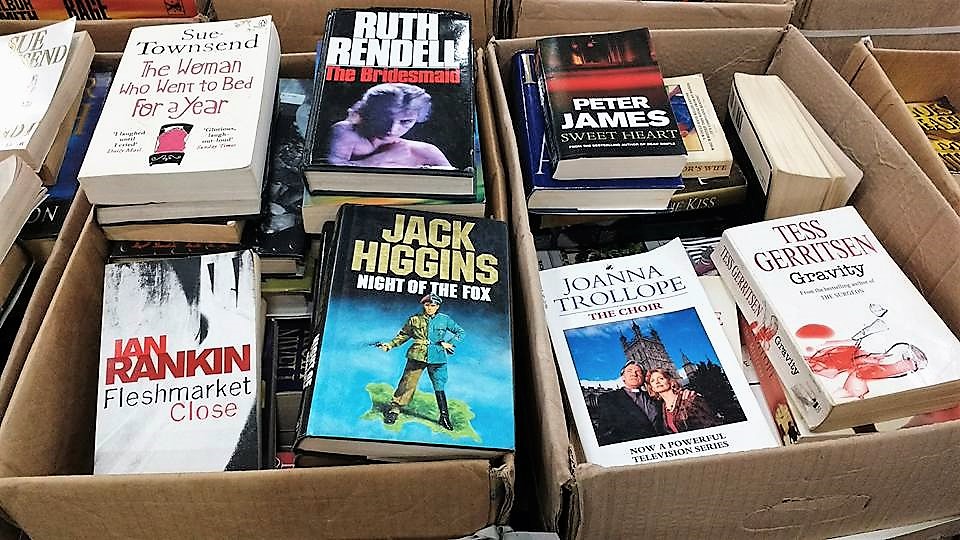
My pick from the box: Jack Higgins, my favourite author.

A pavement bookseller opens for the day.

The suburban bookshop where I browse—and board a bus home.

The English historical novelist on my TBR list.

Fiction rubs spines with self-help in South Mumbai.

Waiting for customers: This footpath bookseller knows his books.

British crime writer Martina Cole at Books by Weight.

A close-up of a footpath bookseller on Mahatma Gandhi Road.

Heavyweights jostle for space at a suburban bookshop.

Take your pick or toss a coin, at Books by Weight.

Spy novelist Craig Thomas is an old friend.

Books in a haystack near the old Central Telegraph Office.

This photo essay was first published in October 2017 and has been lightly updated in June 2026 with revised text and links to related posts. Some of these book haunts may have changed over the years, while others continue to welcome browsers and collectors. But the joy of browsing secondhand books remains the same.

© All photographs by Prashant C. Trikannad