April 06, 2013

The Next Three Days, 2010

For links to more overlooked films and television this Tuesday, check out Todd Mason's blog Sweet Freedom.

It’s a coincidence that this post about Russell Crowe’s The Next Three Days (2010) coincides with his 49th birthday tomorrow, April 7. It was one of many films I watched on television during my recent leave of absence from blogging. I had never heard of this movie before and when I saw it, on STAR Movies last month, the New Zealand-born actor climbed still higher in my esteem. I’d rate his role as John Brennan, the distraught husband of Lara Brennan (Elizabeth Banks) who is arrested and convicted for the murder of her boss, as one of his best. This is a relative term for one whose performance never fails to captivate the viewer.

Like most actors Russell Crowe has a trademark screen persona: he is niggardly with words, he has a quiet intensity about him, and he is awkward. He is no different in The Next Three Days made by Canadian director Paul Haggis (of Crash, Million Dollar Baby, and Casino Royale fame).

In this film, Crowe’s character, John Brennan, is a family man who loves his career wife Lara and their little son Luke. Everything is fine until one morning when the police swoop down on their happy home and whisk Lara away. She is charged with killing her boss and is sentenced to near life imprisonment in Alleghaney County jail in Pittsburgh, Pennsylvania. The evidence against her is clinching or so we are told. John and Lara await the verdict on the appeal even as their lawyer tells them that there is no hope.

Over the next three years, John raises their son, with the help of his father George Brennan (played by the ageing Brian Dennehy) and mother Grace Brennan (Helen Carey), and teaches English at a local college. Between his personal and professional obligations, John never misses a chance to visit his wife in jail and tell her all about their growing son.

As the months pass into years, emotions run high, tempers flare up, and a depressed Lara attempts suicide. In one poignant moment, Lara, who can’t accept her fate, tells John what if she really did kill her boss. John stares at her in disbelief. On his next visit, he tells her that he knows she didn’t murder the woman and nothing she says will ever make him feel otherwise and vows to get her out.

A large stretch of the film has John planning Lara’s escape from the airtight prison. But, before he carries out his elaborate, and often reckless, scheme, he seeks guidance from Damon Pennington (Liam Neeson), an ex-convict who tells him what he stands to lose…should he, god forbid, fail.

“But before you do anything, you have to ask yourself if you can do it. Can you forget about ever seeing your parents again? Can you kill a guard? Leave your kid at a gas station? Push some nice old lady to the ground just because she gets between you and the door? Because to do this thing, that's who you have to become. And if you can't, don't start, 'cause you'll just get someone killed.”

The Next Three Days, an allusion to the last three days before Lara Brennan is transported to another prison hundreds of miles away, is Russell Crowe’s film all the way. No other actor, not Elizabeth Banks, not Brian Dennehy, nor anybody else, matter in this extraordinary film. You think you know what the end is going to be like and yet you are not quite sure. Not when John Brennan buys a gun for the first time in his life and says, “Show me where the bullets go.”

Watch it.

March 10, 2013

A life beyond blogging

It is 10 days since I put out the “no blogging” sign and it might well be another week or 10 days before I decide to return to active blogging. I am enjoying my freedom. The dental work is not yet fully complete though I can chew from both sides of the mouth. It is nice to be able to do that again, feels like a rebirth. I still need to recharge my batteries some more. I am working on it, by meditating and staying positive as is humanly possible, listening to music, keeping away from the computer after office, watching a little television and an occasional movie, having an early dinner and going for a walk, reading a page or two from a book every night, and turning in early.

Speaking of books, I am still reading the three books I was reading last month and I have now added The Phantom Lady by Carter Brown to the lot. At this point I still don’t know which book I am going to finish first. My reading of books has taken a backseat but as long as I enjoy doing what I am doing I don’t mind. I have allowed books to hold me to ransom for long and it’s time to call a page a page. The books always win.

I also revived my interest in short stories during this period. They are easier to read. You read two or three stories consecutively and you, indeed, feel like you have put a novel out of the way. The flavour of the week has been P.G. Wodehouse beginning with The Man Upstairs and Other Stories—something to smile and laugh about—and a few stories by Rex Stout whose mystery novels I am guilty of having never read. I read these during the office lunch break though I can read them any time from 10 am to 6 pm, between writing a news report and editing copy and “doing” the pages. Journalism comes with a lot of incidental perks.
 

I also watched Jack the Giant Slayer in the theatre. The family had the knives out for dragging them to watch this ridiculous film where Bill Nighy looked equally ridiculous as the near two-faced giant chief and where the talented Stanley Tucci tried hard to resurrect his flagging career as the evil-minded royal advisor and betrayer. I think his character died before interval, I don’t remember. The original plan was to see Zero Dark Thirty, hence the knives.

On television, I watched Crimson Tide (for the third time) because I liked the standoff 
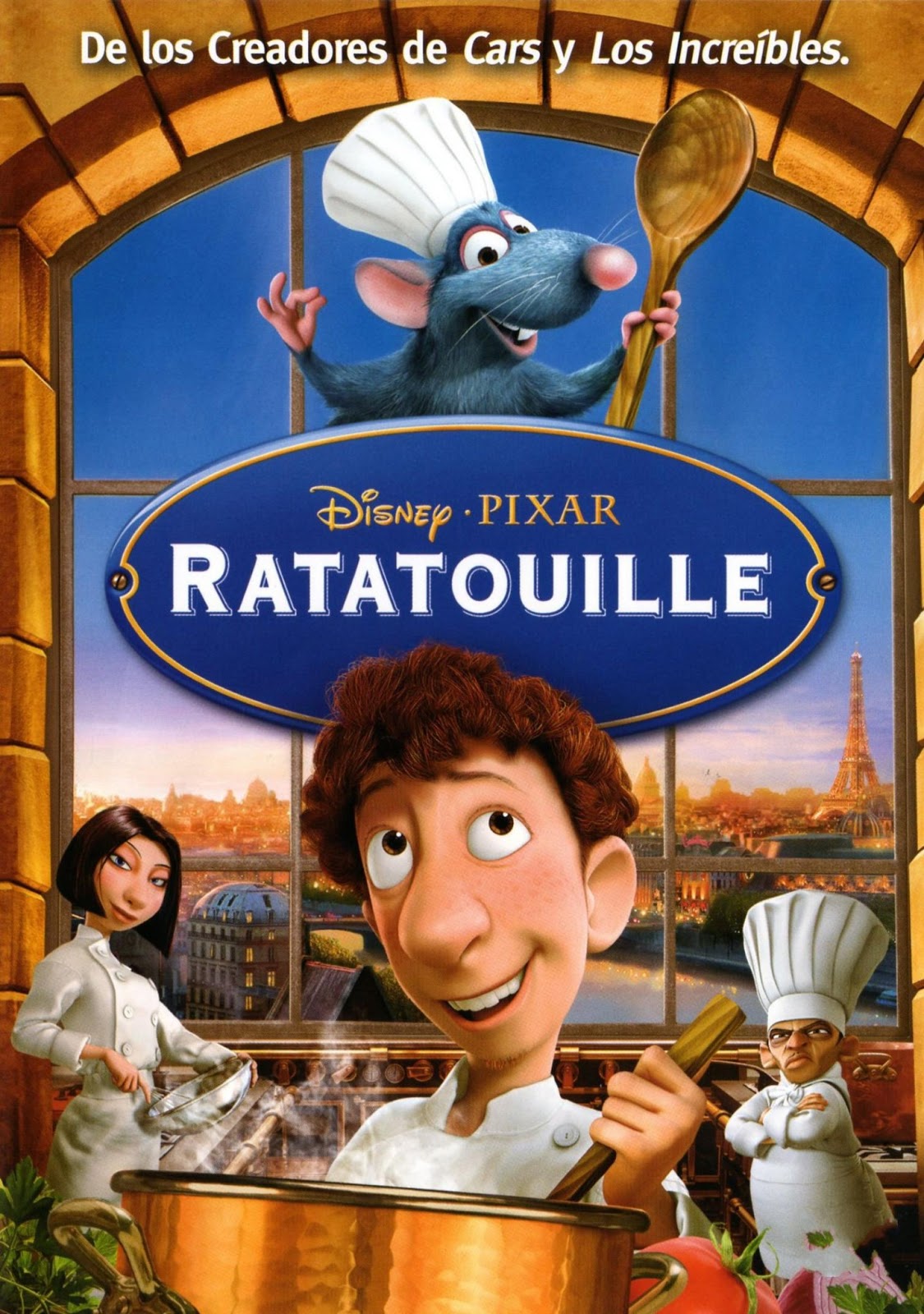
between Gene Hackman and Denzel Washington, inside a US nuclear submarine under water; Wrath of the Titans which had most of the Greek gods pouring out of it, starring Liam Neeson as Zeus, Ralph Fiennes as Hades, Sam Worthington as Perseus, Bill Nighy as Hephaestus, and Rosamund Pike as Andromeda; Enchanted, a rather silly fairy tale with Susan Sarandon, Patrick Dempsey, Amy Adams, Timothy Spall, and James Marsden also trying, in vain, to revive their careers; Unstoppable, a runaway train with Denzel Washington and Chris Pine on board; and Ratatouille, the most beautiful animated film I have seen this century. It’s also probably the best culinary film in many decades, not that I remember seeing many, though Chocolat starring Juliette Binoche, Alfred Molina, Judi Dench, and Johnny Depp was an excellent film. 

Until now it’s been easy to hammer out 564 words and saying little of substance. I will make up for the inanity by leaving you with some of the finest lines I have heard in an animated movie, intoned by Anton Ego (Peter O’Toole), the terrifying food critic in Ratatouille. It’s also a fine piece of writing. Check it out.

"In many ways, the work of a critic is easy. We risk very little, yet enjoy a position over those who offer up their work and their selves to our judgment. We thrive on negative criticism, which is fun to write and to read. But the bitter truth we critics must face, is that in the grand scheme of things, the average piece of junk is probably more meaningful than our criticism designating it so. But there are times when a critic truly risks something, and that is in the discovery and defence of the "new". The world is often unkind to new talent, new creations. The new needs friends. Last night, I experienced something new: an extraordinary meal from a singularly unexpected source. To say that both the meal and its maker have challenged my preconceptions about fine cooking is a gross understatement. They have rocked me to my core. In the past, I have made no secret of my disdain for Chef Gusteau's famous motto, "Anyone can cook." But I realise, only now do I truly understand what he meant. Not everyone can become a great artist; but a great artist "can" come from "anywhere". It is difficult to imagine more humble origins than those of the genius now cooking at Gusteau's, who is, in this critic's opinion, nothing less than the finest chef in France. I will be returning to Gusteau's soon, hungry for more."


March 01, 2013

Hooray! No blogging!

I won't be blogging for a few days owing to a protracted dental treatment and the need to recharge my batteries. However, I will be visiting blogs and leaving comments as often as I can. And I will be back before you know it.

February 26, 2013

FILM REVIEW

The Descendants and The Dilemma (2011)

Released in 2011, these two films strictly don't make the Overlooked Films grade at Todd Mason’s blog Sweet Freedom this Tuesday. If they do it's because I overlooked them.

Sunday night, I went to bed after watching Matt King (George Clooney) agonise over the secret affair of his dying wife Elizabeth (Patricia Hastie) and the gulf between him and his two daughters in The Descendants. I thought I’d wake up just before 6 am, Monday, do yoga, have a cup of tea, and catch the Oscars live. I overslept, though the milkman rang twice. Instead, I watched a recording of the Academy Awards at 8 pm and missed out on a rerun of the very enjoyable Everybody Loves Raymond at half past eight.

The half-hour or so of red carpet stayed true to the cobwebbed script and then the greatest show biz on earth started. Seth MacFarlane, a young man with gleaming white teeth (an Oscar for his dentist, please), came on stage with a quiver full of bawdy jokes and ill humour. I have absolutely no idea who MacFarlane is. I googled and discovered that he is an “American actor, voice actor, animator, screenwriter, comedian, producer, director and singer.” I still don’t know who 
MacFarlane is. I wonder if he thinks he looks like Gene Kelly. 

Ten minutes into the MacFarlane-Shatner enterprise and I was shattered enough to switch channels. I caught Alexander Payne’s The Dilemma on HBO and this time around found Ronny Valentine (Vince Vaughn) agonise over the secret affair his best friend and business partner Nick Brannen’s (Kevin James) wife Geneva (Winona Ryder) is having with a complete stranger.

Two men torturing themselves over the extra-marital affairs of two of the most trusted people in their lives. Another man tormenting millions of viewers from Dolby Theatre in Los Angeles. The week had ended and begun on one heck of a note.

Just the previous night, I had seen Clooney, a Hawaiian land owner in half pants and seemingly without a shave or bath for days, trying to come to terms with his comatose wife’s fling with real estate agent Brian Speer (Matthew Lillard). She is off life support, as per her will, and is about to die. Clooney decides that the only way to get over the pain of betrayal is to confront her lover and ask him to say a final goodbye to his wife while she is still alive (who does that? Clooney is nuts!). Instead, his wife Julie Speer (Judy Greer), who I mistook for Tilda Swinton, lands up at the hospital and, between loud sobs, forgives her for sleeping with her husband.


Give the man a break, will you? I mean, look at Clooney. Inside Dolby Theatre, he looked like he hadn't shaved since attending his ‘wife’s funeral’ and ‘making up with his daughters.’ On top of it, you have MacFarlane (above) jabbing him with sexual innuendos over poor nine-year old Quvenzhané Wallis, nominated for Best Actress for Beasts of the Southern Wild, and throwing a small whisky bottle at him.

Clooney was actually smiling. What could he do? He was in the front row. Well, he could have thrown his shoe at MacFarlane. Angry Indians often fling their shoes and chappals at politicians and ministers.

Meanwhile, Seth MacFarlane’s audacious ‘boob’ number, in spite of its deft execution, was enough to make me switch back to The Dilemma where Vince Vaughn, who is living in with Beth (Jennifer Connelly), is fighting his own demons—to tell or not to tell Kevin James the bitter truth about his wife. The delay in opening up to his best friend lands Vaughn in trouble with family and friends.

Vince Vaughn is tall, big, and loud while Kevin James is short, fat, and quiet, but they click together, even though Vaughn grabs all the attention like a spoilt child. They reminded me of that other long-and-short couple, Will Smith and Kevin James, in Hitch. You wonder if director Ron Howard was reliving a successful formula.

The Descendants and The Dilemma with a somewhat common thread are reasonably good films that you can watch if you have a lot of free time or, better still, avoid agonising over Seth MacFarlane’s emceeing at next year’s Oscars.

February 24, 2013

BOOK REVIEW

The Hessian by Howard Fast (1972)

American novelist Howard Fast is a wonderful storyteller. Like Jeffrey Archer across the Atlantic. Many of their books, especially Fast's, have historical and biblical significance; their stories are plain and simple, yet compelling; their narrative and substance is devoid of hyperbole; and their characters are extraordinary in an ordinary sort of way.

Howard Fast died in 2003 but I refer to him in present tense because of his impressive body of work comprising some 50-odd novels that include the Masao Masuto Mysteries under the E.V. Cunningham pseudonym and a few works of non-fiction and short stories. I haven't read many yet.

I read Howard Fast books many years ago and, I think, The Hessian is his first book I read this century. It turned out to be an educative and entertaining read, a fictional account of what might have been a factual event.

Author Howard Fast
© Wikimedia Commons
The Hessian is set during the American Revolutionary War or the American War of Independence in the second half of the 18thcentury. The Hessians were German soldiers hired by the King of England to fight against the 13 colonies that revolted against Great Britain’s rule. The Hessians were so called because a majority of the soldiers came from the Hesse region of Germany. They were called “mercenaries” by the American colonists.

The Hessians wore boots and shining black hats and green jackets with bright yellow facings, sported waxed moustaches, and carried bayonet scabbards that slapped against their thighs. The sight of the Hessians, as they marched in tandem with the beat of drums, sent chills down the spines of their opponents.

The story in The Hessian is narrated in the first person by Doctor Evan Feversham, a colonel in the Continental Army (a precursor to the United States Army) during the American Revolution. He is a Catholic from England and married to a Protestant woman. He lives with her community and practices medicine on the Ridge in Connecticut, in the New England region.

A detachment of 16 Hessians preceded by a youthful drummer boy named Hans Pohl and their commander Wolfgang Hauser disembarks from a British frigate and marches towards the Ridge. They belong to the Jäger Regiment, a German light infantry unit.

Hessian soldiers
© Wikimedia Commons
As the troops make their way towards the Ridge, they meet Saul Clamberham, an orphaned and oversized halfwit, and hang him to a tree. The lynching is witnessed by Jacob, the 12-year old son of farmer Raymond Heather, a Quaker, who lives on the Ridge with his family.

The news of Saul Clamberham’s killing spreads through the Ridge. In no time Squire Abraham Hunt, the rigid and influential Yankee aristocrat and chief of the local militia, leads a band of armed men in ambush of the Hessians and kills them in cold blood, even as Doctor Feversham, his medical kit in hand, watches in horror and helplessness.

In the mayhem, Hans Pohl, the drummer boy, is seriously wounded but manages to escape and is eventually sheltered by Raymond Heather’s courageous and compassionate Quaker family which, apart from his son Jacob, includes his wife Sarah and 16-year old daughter Sally.

As Doctor Feversham treats and heals the drummer boy, he realises the enormous sacrifices made by the Quaker family in protecting Hans Pohl, the surviving Hessian. He is nursed back to health by Sally who falls in love with him. This is their story.

Meanwhile, Squire Hunt, who has certain differences with Doctor Feversham, is desperately hunting for the drummer boy so they can try him for murder of Saul Clamberham and hang him. The Squire and the small New England community he represents believe in an eye for an eye and tooth for a tooth because they know no other way in war. Theirs is a land without mercy.

If I go any further, I’ll have to sound a spoiler alert.

This period image shows Hessian soldiers as heartless warriors.
© www.ushistory.org

While the hunt for the sole survivor of the brutal Hessian massacre on one hand and a beautiful girl’s love for the drummer boy on the other form the main plot of The Hessian, there are several elements in the story that I found interesting.

For example, narrator Doctor Feversham has seen the worst of war and he is in a perennial state of mental conflict over what is right and what is wrong, frequently brooding over the “desolate wasteland” of his life and the “meaningless fragment” he has become on the Ridge. The Heather family’s kind attitude towards Hans Pohl and their willingness to take him as their own reveals to him the goodness in people, in this case the Quakers on the Ridge.

Feversham, a Catholic, is unable to come to terms with the Protestant community’s hunger for Hans Pohl’s blood even as his wife Alice tries to clear his misgivings by stating, “We are not barbarians, Evan, we are plain Christian people who were persecuted and driven for a hundred years before we came to this land.” A bitter Doctor Feversham remains unconvinced.

Squire Abraham Hunt is determined to hang the surviving Hessian even as he battles his conscience, indicated subtly in the overall narrative.

Doctor Feversham’s unspoken and undeclared love for Sarah Heather adds to his emotional conflict but he remains loyal to his American wife, Alice, who knows he continues to harbour feelings for the Quaker woman.

At 219 pages, The Hessian is a poignant and compelling story but it lacks the intensity, particularly the avowed passion between Hans Pohl and Sally Heather, which one might expect at the start of the book. Instead, the narrative focuses more on Doctor Feversham’s inner battles that rage in the backdrop of a war that has thought man to hate and to kill. Although the story moves at a fairly dramatic pace, you can guess the events as they unfold right up to the end. Nonetheless, Howard Fast has written The Hessian in his inimitable style, a unique historical story told in a beautiful way.  


Notable lines from the book

“Believe me, there are no better soldiers in the King’s army than the Hessians and it was no great risk for them to come up onto the Ridge with sixteen muskets.”

“God damn that,” I cried. “Every soldier who set foot from a ship onto our soil killed for hire—Hessian, British, French, Scot! What damn difference does it make? They all kill for hire! This whole filthy game is played for hire! I’m only asking you not to make us like them, to show some Christian mercy!”

“No one in his right mind wants war in his back yard, and since the war was down in Virginia now, only a damn fool would take measures to introduce it into Connecticut.”

“What eats you, Feversham? You were a soldier, I was a soldier. When we fought the big battle on the other side of the Ridgefield, there were ten times that many dead, and not Germans either but our own kids. You want me to weep for them?”

February 23, 2013

Crime fiction anthology for Maxine Clarke

This post is long overdue. 

Maxine Clarke © www.nature.com
On February 10, Margot Kinberg, mystery novelist, university professor, and prolific blogger, announced a novel project on her blog Confessions of a Mystery Novelist… by way of a well-deserved tribute to Maxine Clarke who passed away in December last year.

Maxine, as many of you know, loved crime fiction and supported crime fiction writers in many ways. At her blog Petrona, Maxine used to write about “intelligent crime fiction from around the world” and introduce readers to many new writers and their books. Her reviews of crime fiction novels were read widely. I looked forward to reading her final word on the book in the last paragraph of her review. She also worked as an editor at Nature. You can read the science magazine's tribute to Maxine here.

In her memory, Margot will compile an anthology of crime fiction short stories and the proceeds from the collection will go to the Princess Alice Hospice, UK, which was very supportive of Maxine and her family in their hour of need.

“Maxine Clarke was an avid reader and strong supporter of crime fiction and crime writers. The world of crime fiction lost one of its dearest members and I lost a good friend when Maxine passed away in December 2012. As a way of giving back just a little of what she gave to us all, I’ve decided to put together a crime fiction short story anthology,” Margot says in her February 10 post.

Margot has invited authors to contribute stories for her proposed anthology, whose focus will be “on crime in the world of editing, publishing, writing and/or reviewing.” Readers can help by spreading word about the project. It deserves to reach as many people as possible, both writers and readers of crime fiction.

For more details about this project, you may write to Margot Kinberg at margotkinberg@gmail.com.

February 22, 2013

Something happened

Not very unlike what happens to Bob Slocum in Joseph Heller’s namesake book. Little events not connected to each other…a global conference, slight indisposition, dental treatment, procrastination, work overload, print deadlines, lethargy…enough to drive me round the bend and question my sanity. Before I knew it, I had stayed away from my blog for a week though not from other blogs. Frankly, it felt good. 

I used the self-imposed and self-inflicted diversions doing a little of this and that. I read very little during this period. I am still ploughing through The Iron Tiger by Jack Higgins and Transplant by Frank G. Slaughter, authors I'd usually finish reading in a couple of days. The Great White Army by Max Pemberton remains on the backburner. Pemberton is a very good writer and his books deserve to be read and reviewed. They are available on the internet.

At this point reading a book seems like an uphill walk. I have had more luck with comic-books.

I bought and read part of a western comic-book Wes Slade: The Living Dead, written and designed by George Stokes who initially drew it as a comic strip for Britain’s Sunday Express. While the black-and-white illustrations are fantastic, the print in the speech bubbles is tiny and hard on the eyes.

I also purchased a handful of Amar Chitra Katha (Immortal Picture Stories), India’s indigenous and largest-selling comics that retell stories from Indian history, epics and mythology, and fables and folklore. I picked up The Story of the Freedom Struggle that affords a chronological look at India’s independence movement from the time the British occupied the country in early 19th century to its independence on August 15, 1947. Although I know most of the famous and the not-so-famous freedom fighters of India, thanks to my school history textbooks, this particular comic-book threw up several unsung heroes and their selfless acts of valour.

The other three ACK comics I bought were Tales from the Upanishads: Tales of Peace and Wisdom, the ancient Hindu scriptures; Sea Route to India: In Quest of the Ultimate Destination, which explores the trade expeditions to India by European explorers like Bartholomew Diaz, Christopher Columbus, and Vasco da Gama; and Marie and Pierre Curie: A Passion for Science that requires no explanation.

The rest of the week was spent reading a couple of spiritual books and listening to spiritual music, something that I have been doing off and on for years. A little soul-searching always helps.

I hope to get back to active blogging this weekend, hopefully, with a review of The Hessian by Howard Fast, fiction steeped in history, and respond to generous comments left under my posts. For now I have a few more comics to read.