Showing posts with label Short Stories. Show all posts

October 31, 2024

Short Story: An Occurrence at Owl Creek Bridge

An Occurrence at Owl Creek Bridge by Ambrose Bierce book coverAn Occurrence at Owl Creek Bridge, 1890, by American writer and poet Ambrose Bierce is the poignant tale of Peyton Farquhar, a well-to-do planter and slave owner sentenced to hang by Union soldiers for attempting to sabotage a railroad bridge in northern Alabama during the Civil War.

Farquhar, described as a secessionist and an ardent supporter of the Southern cause, is minutes away from being executed on the bridge. But just as the noose tightens around his neck, he has an epiphany of sortsan intense vision of escaping his captors, falling into the river below, swimming against the currents and bullets, reaching the opposite bank and tearing through the woods to finally make it home, to his wife and children.

One can assume that Ambrose Bierce, a Civil War veteran, draws from his own experience to paint a vivid picture of Farquhar’s illusory run for freedomand, in many ways, his desperate, real-life, yearning to survive the war and go back to a normal life with his family. In that sense, the author masterfullyand poeticallyblurs the line between reality and imagination.

An Occurrence at Owl Creek Bridge is as much a story about the tragic plight of Peyton Farquhar, the soldier, as it is about the brutality and futility of warin fact, all wars. There is no dignity on the battlefield, neither in victory nor in death. That’s how I interpreted the story and its ending.

A well-crafted and thought-provoking story. One I will be sure to read again in the future.

Post-story, I read that An Occurrence at Owl Creek Bridge was originally published by The San Francisco Examiner in July 1890, and was part of Ambrose Bierce's book Tales of Soldiers and Civilians a year later. It is considered one of the most famous and frequently anthologised stories in American literature. The short story has also been adapted for film and television.


October 11, 2020

Short Story: The Case of the Wandering Redhead by Leigh Brackett

I’d never read Leigh Brackett until now, and I’m glad I finally did. I discovered her short story, The Case of the Wandering Redhead, in the February 1951 issue of New Detective Magazine and thoroughly enjoyed it.

This is the introduction to the story.

“Here is the most ruthless man you’ve ever met—a filler whom death could not soften nor bullets stop—yet whose relentless fists battered to their last futile gesture that softest thing a man ever finds—the heart of a woman in love. It is with a definite sense of accomplishment that we welcome Miss Brackett to these pages—which many of you will find unforgettable!”

New Detective Magazine book cover

The “ruthless man” is Marty James, a territorial gangster who lives by his guns and fists and serves as the story’s narrator. He is hopelessly in love with Sheila Burke, a stunning redhead he is determined to marry, even though she detests the very idea. Sheila rejects him outright—just as decisively as he would gun down an adversary. And she has every reason to want nothing to do with him.

“Can I get it through your head? I hate you, Marty. I hate everything you stand for. All I want out of life is decency and peace and maybe a little happiness. You can’t give me any of them.”

But Marty has no intention of leaving Sheila alone. In fact, he is trying to force her into marriage when his sidekick summons him away on urgent business, only to betray him to a rival gangster eager to seize his territory. Marty fights and shoots his way out of captivity before returning to Sheila, carrying a cracked rib and two bullet wounds in his thigh.
 

"Six flights, with thin snow beginning to fall, thinking of Sheila’s voice saying, There’s blood on you, Marty. You’re not in my world.

"I thought, All right. That’s the way it is, Sheila. That’s the way we’ll play it. I was colder than the snow, and numb."

The Case of the Wandering Redhead is a cracker of a story. Its two central characters, Marty and Sheila, are vividly drawn. Marty may be a ruthless gangster, but he is also, in his own words, "human enough to go crazy over a girl."


"I looked at her. She was beautiful. She was like something the wind might cut out of a snowbank, with the red fire of her hair on top. Her eyes met mine, and there was an awful coldness in them, like I’d killed the spark inside her."

The story is a fine example of hard-boiled crime fiction from the Golden Age, though I still have plenty to explore and read in the genre.

January 10, 2020

Book Review: A Lesson in Deceit by Gillian Larkin

They came to a crossing and Sam pressed the button. “Anyway, let’s talk about you. How many dead bodies have you found now? Granddad thinks you’re cursed.”

“It’s not my fault I keep finding them,” Julia said with a note of indignation.

(As an Amazon Associate I earn from qualifying purchases.)

A Lesson in Deceit by Gillian Larkin book cover

A Lesson in Deceit by Yorkshire-based author Gillian Larkin is the first book in her Julia Blake cozy mystery series. It is a delightful novella about a murder set in the University of Edinburgh.

Julia Blake has a son, Sam, and a daughter, both of whom she dotes on. She lives in Leeds with her Scottish shortbread-loving father and runs a cleaning business to support her family. Life has not been easy since her husband left. But her hardships have not deterred her from caring for her family or from finding herself drawn into murder mysteries, often unintentionally and to the annoyance of DI Clarke of Leeds.

Julia is visiting Sam at his university and is full of maternal affection and concern. Sam takes her around the campus, including the local pub where he works part-time. There, he introduces Julia to his close friend Elliott, who is covering his shift that day. Elliott works many shifts because he needs the money and, as a result, often misses lectures. Lately, he hasn’t been himself, prompting Sam to suspect that something is troubling his once happy-go-lucky friend. Elliott’s situation stirs Julia’s maternal instincts.

But before Julia can think of helping him in any way, her father’s prophetic words come true again—she finds Elliott dead in his room. There are no signs of injury or a struggle. Did he overdose on painkillers and sleeping tablets? Or was he poisoned with a combination of the two drugs?

DI Thostlewaite, who has heard of Julia’s reputation and her tendency to turn up where corpses do, gently advises her not to interfere in the case. But she has no choice when the local police detain Sam as a suspect.

“Grandad wants to know if you’ve found any dead bodies yet. Ha! He’s so funny.”

“Dead bodies are never funny,” Julia replied.

A Lesson in Deceit is not a murder mystery in the true sense. There is no major investigation or extended unearthing of clues, which Julia predictably does at some risk to her life. She and Sam are likeable characters, mainly because of their strong familial bond, easy relationship and light banter. The author also neatly interlaces the narrative with values. For instance, when Julia offers Sam extra money so he does not have to work at the pub, he tells his mother that she has done enough and that he wants to pay his own way—a nice lesson for young readers. 

The novella is written in an easy, engaging style, and will appeal to both younger and older readers alike.

January 03, 2020

Short Story: The Bodyguard by Lee Child

© ITW Publications
She took my formal qualifications for granted. I have scars and medals and commendations. I had never lost a client. Anything else, she wouldn't have been talking to me, of course. She asked about my worldview, my opinions, my tastes, my preferences. She was interested in compatibility issues. Clearly she had employed bodyguards before.

(As an Amazon Associate I earn from qualifying purchases.)

If ever I have read a story that captures the all-too-real fictional world of bodyguards in just a few pages, it is in 'The Bodyguard,' a short story by Lee Child
It was first published in First Thrills (2010), an anthology of tales involving murder, mystery and mayhem by various authors and edited by Child himself, and later reprinted in his collection Safe Enough and Other Stories (2024).

The British author succinctly describes the life and work of a highly-trained bodyguard who quits the military to protect the rich, the famous and the powerful.

Written in the gripping style familiar to readers of the Jack Reacher novels, 'The Bodyguard' introduces a nameless protagonist who could either be real or phony. Child quickly establishes both the uncertainty surrounding the man and the risks of his profession. His clients are mostly wealthy individuals, business magnates and the politically connected, all vulnerable to kidnapping for ransom. The threat is particularly acute in parts of South America, where abduction seems less a crime than a thriving industry.

A year after leaving his friend's agency to start his own business, the bodyguard—a "medium-sized man, lean, fast, full of stamina"—is hired by Anna, a wealthy and attractive 22-year-old whose father is a Brazilian politician and businessman and whose mother is a television star. But the assignment, and a perilous trip to Brazil, do not go according to plan.

The 3,110-word story ends with an unexpected twist that, while stretching credibility a little, adds to the fun and makes it well worth reading. I have enjoyed Child's work ever since I read his first Reacher novel, Killing Floor.

November 09, 2018

The Sheriff of Kalbadevi

I have been a big fan of Western Fiction or Frontier Fiction from the time a paternal uncle introduced me to English writer Oliver Strange's Sudden series. I was in my teens and I was hooked. His ten novels and an additional five by Frederick H. Christian (British writer and editor Frederick Nolan) have been featured on this blog a few times. The exploits of James Green, alias Sudden, the Texas outlaw, led to my heightened interest in other western authors, notably Louis L'Amour, J.T. Edson, Zane Grey, Max Brand, George G. Gilman, Wayne D. Overholser, Jonas Ward, Giles A. Lutz and others. I continue to read westerns.

Since then, however, I have always dreamed of writing a western novel. There were even a few halfhearted attempts. In August 2015, I began work on a Wild West-comes-to-India novel in earnest. At least, that was the plan. I typed out a few thousand words and was pleased with the way the story was shaping up. It was about a Western-styled Indian sheriff set in an old part of Mumbai in the 21st century. So it had cowboys and gunfights as well as four-wheeler taxis and pizza delivery.


But Procrastination and Distraction, the two nemesis of my writing life, bushwhacked me along the way and that was the end of what I thought would one day be my debut novel called The Sheriff of Kalbadevi.

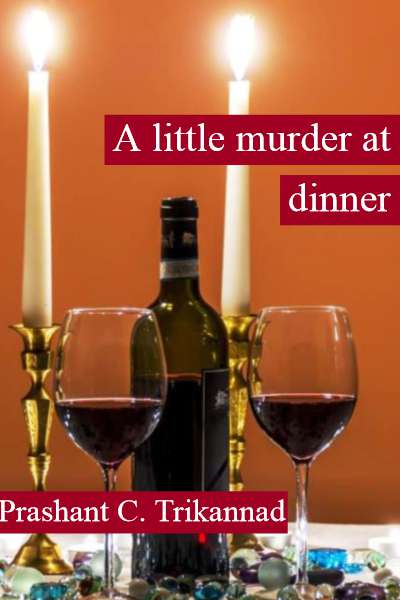
Then, last month, I read about a short story contest at Juggernaut Books, a popular Indian writing platform where I had previously published an atmospheric tale set around a murder mystery, titled A Little Murder at Dinner. I retrieved my western story from the recesses of D drive on my computer, scaled it down to a little over 2,000 words, got the family to proofread the story, and uploaded it on the Juggernaut website. As of writing this post, the results were yet to be announced.

The story begins in Kalbadevi, an old neighbourhood of Mumbai named after the Hindu goddess Kalbadevi. The area has an old-world charm and is known for its wholesale markets, usually bustling with activity six days a week. I worked along its periphery for many years.

This is how The Sheriff of Kalbadevi begins.


Friday night descended on Kalbadevi like any other summer night, the weather still unforgiving. Long after the Indian sun ducked into the Arabian Sea, the old neighbourhood of Mumbai was enveloped in a haze of April heat and dust. Red earth rose and swirled in the air, settled down, and rose again.  
Kalinga sat hunched on his horse under a yellow streetlight. He blew smoke from a cigarette and looked around him with a sense of boredom. There was little movement on the intersection of Princess Street and JSS Road. Two young cowboys on horseback were riding out, back to their ranch or maybe to the seafront on the other side of town, to meet their girlfriends. A woman hurried across the street with her young son and disappeared round the corner of a dilapidated building. Shopkeepers and roadside hawkers were closing business for the day. A group of weary traders vanished behind a tobacco-stained curtain into a country liquor bar. When they staggered out, they would be men no more. He eyed them with distaste.

And here is a significant passage appearing towards the end.

The four gunmen stared in disbelief as two six-guns appeared magically in the sheriff's hands and spit fire simultaneously. They didn't stand a chance. His first bullet caught Balki plumb between the eyes. He died instantly and slid to the ground head first. His horse bolted. Two of his sidekicks got a bullet each in the chest and were thrown off their horses. His fourth bullet sliced through the throat of the last man who slumped in his saddle. It was all over in less than a minute.
Instantly, a new legend was born and it'd travel miles and miles, just like all of his fabled gunfights of the past.

If you're tempted to read the full story, then please click here. I hope you like it. I had fun writing it, partly because it was an original idea.

And if you're still around, you may also like to read A Little Murder at Dinner and the related Editor's Pick of the Week interview Juggernaut Books did with me in June this year.

January 18, 2018

Merrick by Ben Boulden, 2017

"Thief, gunman, killer. A hero you'll hate, but root for anyway."
 
Every time I watch a movie about a heist or read a story about a robbery at gunpoint, the first thought that comes to my mind is Something’s going to go wrong. In spite of meticulous planning, things don’t always go as intended. That’s exactly what Merrick—a tough outlaw with a conscience and the hero of this fast-paced Western short story by Ben Boulden—finds out when he teams up with an old partner to ambush an armoured wagon in Texas and make away with a $15,000 payroll.


Merrick, who is brought in as a last-minute replacement, is mindful of the risks involved in the venture. He knows by experience that a holdup is never easy, even if the dough is. Though he is reluctant to accept mastermind Clarence Tilley’s offer at first, the .44 Remington wielding outlaw cannot escape the allure of money and the prospect of moving to the California coast and living it up.

But the outlaw’s getaway plan is dashed to the ground when Spider Robison, a particularly vile, greedy and trigger-happy gang member, double-crosses his accomplices, wallops Merrick in the head and decamps with the loot. After regaining consciousness, Merrick sets out to hunt down Robison, not so much to seek revenge as to retrieve his rightful share of the heist and be on his way.

Merrick is not the quintessential Wild West outlaw. He is an outlaw alright but one with scruples, the kind who’d indulge in unlawful acts but probably won’t go beyond a limit. While he can be tough and dangerous, and shoot to defend himself, he also has a certain vulnerability, a sense of fair play and justice, perhaps even compassion, which sets him apart from others of his kind.

All of 25 pages, Merrick is a cracker of a Western story that fans of the genre will enjoy reading. The plot—a stage robbery gone wrong—reminded me of pocket-size black-and-white Western comics I was fond of reading in my youth. I could visualise each scene unfold in the form of a comics panel or frame. In that sense Merrick would make for a very entertaining comic-book.

I hope Ben Boulden—author of Blaze! Red Rock Rampage (15) and Blaze! Spanish Gold (18) in the Blaze! Adult Western Series—casts Merrick in more short stories, perhaps even a novel or two. I’d like to read more about the Utah outlaw’s exploits in the author's crisp narrative style. Recommended.


Available for Kindle, $0.99.

December 31, 2017

Nothing much happened

2017 was probably my worst year of reading and writing in recent memory. I read very few books, short stories, essays and poetry, and reviewed even less on my blog. I was preoccupied with personal and professional labours, even as commuting to work and back got more stressful, which left me with little energy to read or blog. 
© Bill Waterson

As the year wore on, my visits to other blogs declined. It was the one thing I missed the most. But a New Year, as Calvin tells Hobbes, is a "new beginning" and full of "new possibilities" and I look forward to reconnecting with my fellow readers and bloggers. In fact, it's the first thing I'm going to do in 2018, starting tomorrow.

Some of you may have noticed that I'm quite active on social media but that's only because I mostly post on the go, waiting for a bus, an autorickshaw or a suburban train and sometimes during actual commute when I'm in no mood to read. What I didn't achieve reading and blogging, I more than made up with social media—I doubled my followers on Facebook, Twitter, LinkedIn and, more recently, Instagram. It's another thing that I know less than 50 per cent of my connections. I have also been listening to a lot of old music and playing a lot of chess and Scrabble on Android. I have been playing the two board games since I was a kid, thanks to dad.

During the year I watched many films and serials, mostly Netflix originals including Marvel's stand-alones—Daredevil, Luke Cage, Jessica Jones and Iron Fist—though I still have to watch their combined miniseries The Defenders. I enjoyed Godless (western) and Alias Grace (psychological), both six-part limited series. Alias Grace is based on Margaret Atwood's Booker-nominated novel, which I have not read. Beasts of No Nation, the story of a child soldier in a war-torn African country, was a disturbing film. Idris Elba's character as the rebel warlord lacked depth.

For some reason, I also binge-watched Jason Statham's crime flicks on Netflix and I quite enjoyed it all; his films reminded me of the hard-boiled thrillers I often read. A couple of plots were straight out of a James Hadley Chase or a Lionel White, particularly the two caper movies The Italian Job and The Bank Job.

I also watched Minimalism: A Documentary About the Important Things, which "Examines the many flavors of minimalism by taking the audience inside the lives of minimalists from all walks of life—families, entrepreneurs, architects, artists, journalists, scientists, and even a former Wall Street broker—all of whom are striving to live a meaningful life with less." I found it interesting though there was nothing new about the "less is more" principle; mystics have been advocating it for centuries. We just need to be reminded of it every now and then. To be honest, I have been hoarding books when I should be reading and giving them away, at least the ones that aren't going to be a part of my collection. 

© www.theminimalists.com

On the writing side, well, I'm still writing; struggling actually, with time constraints and writer's block, though the latter is a self-created myth. It's an excuse not to write and watch a movie, instead. I have incomplete short stories, a novel I've only recently started working on, and a work of nonfiction that I hope will make people feel good about themselves. I'm going to persist with these projects in 2018, try and write every single day, and work to a deadline.

© Juggernaut Books
On a slightly positive note, I published my first short story, A Little Murder at Dinner, at Juggernaut Books, a Delhi-based writing platform. It's an atmospheric tale about a cop and his wife, and set around a couple of murders.

Here is an extract from that story:

“Do you really think she did it, Harry?” Trisha’s voice was almost a whisper.

Hemmady shrugged, “The Dina I knew a long time ago couldn’t have done it. Now I’m not so sure. People change and that’s not always good. Sometimes bad things happen. I think she and Rana decided to get back together, maybe for Jenny’s sake, maybe for the money, and it all went wrong. I feel for Jenny. She didn’t deserve any of this.” 

“Will you be okay, Harry? I mean, you’re going to see her...,” Trisha’s voice trailed off.

“I’ll be fine, Trish. It’s just another homicide.”

She didn’t stress the point. They both knew it was more than that.


So that's how the year was—nothing much happened. But I do hope to make things happen in 2018, particularly where my writing is concerned.

September 20, 2017

Booty for a Badman by Louis L'Amour, 1960

My belly was as empty as my prospect hole, and it didn't seem like I had much choice.

When young William Tell Sackett, the oldest of the three Sackett brothers, has no luck panning for gold, he agrees to carry 50 pounds of the yellow metal out of the camp and deliver it safely to a bank in Hardyville—all for a princely fee of $100. The gold belongs to four miners who trust him. There's just one problem: he must carry it through desert-mountain country over five days. And Tell knows he won't be alone on the trecherous journey. The Cooper gang, who make a living out of robbing and killing successful prospectors, will be hot on his trail. 

Unmindful of dangers on the trail, the quiet, honest, and tough cowboy packs a horse and rides out with the gold, each pound worth $1,000. He is not worried about the Coopers. While he can take on the desperadoes, he's not so sure what to do when he encounters Christine Mallory, a pretty woman on the run from her soldier-husband and stranded in the middle of nowhere. Disregarding his father Colburn Sackett's advice to stay clear of women because "They'll trouble you. Love 'em and leave 'em, that's the way," the chivalrous Tell agrees to escort her to Hardyville on the Colorado, even if it means slowing down and risking his life.

Right then I'd much rather have tangled with the Coopers than faced up to that woman down there, but that no-account roan was taking me right to her. Worst of it was, she was almighty pretty.

And then, all of a sudden, the Cooper gang turns up. Here it comes.

Booty for a Badman is a fine Western story told in an engaging, concise, and easy style, a Louis L'Amour trademark. The author draws a vivid picture of the wild country, the hostile terrain, the dust raised by his pursuers in the distance, the night campfire and smoke without going into a lot of detail. Tell is a god-fearing and an honourable man, as evident from his gentlemanly behaviour towards Christine who he addresses as "Mrs. Mallory," but he can't help dreaming of settling down with a woman like her and raising a family. In the end L'Amour throws up a couple of twists that I didn't see. I'm glad for it's the element of surprise that holds my interest in a story, especially a Western that often finishes along predictable lines. 

The short story, first published in The Saturday Evening Post, July 1960, and subsequently reprinted in the same magazine, 1975 and 1988, is part of The Collected Short Stories of Louis L'Amour: The Frontier Stories, Volume One. I believe there are at least four other volumes in this series, and including other stories add up to more than 250. I read L'Amour—one of the most popular and prolific writers of the last century—after many years, and I'm prompted to read (and reread) his Sackett series among other novels.


Note: For more Friday's Forgotten Book reviews, visit Todd Mason's blog Sweet Freedom. Todd is doing the FBB honours this Friday in place of Patti Abbott at her blog Pattinase.

February 14, 2017

History, My Story

Last year, I sent this nostalgic piece to an online poetry website. This morning, I received a polite and sympathetic rejection of my submission as well as an encouragement to submit again any time I liked. I’m grateful to the editor for considering my work—one of over a hundred thousand he receives every year. His is a tough call. I will continue to write—and write better, hopefully—and continue to send out my stuff. Hope springs from the roster of famous writers who were repeatedly rejected before they were first published. I’m still taking guard at the starting block of creative writing.

Here is the slightly modified version of my poem History, My Story.


Chronicle of past times
and all of human history.
Record of peoples and events
glorious and dark.

My beloved subject
in high school and after.
Till a teacher's misdemeanour
makes me hate it, almost.

Bell rings, class out
rushing down the aisle.
He grabs me by the collar
slams me against the wall.

What did I do?" A fearful cry
"How dare you distract!" he rages.
Pleading look, sniggering mates
they wink and smile. 

Calendars later, I still remember
the day, the date, the pain.
'twas a history lesson
I will never forget.


© Prashant C. Trikannad

December 25, 2016

The Gift of the Magi by O. Henry, 1905

"One dollar and eighty-seven cents. That was all. And sixty cents of it was in pennies. Pennies saved one and two at a time by bulldozing the grocer and the vegetable man and the butcher until one's cheeks burned with the silent imputation of parsimony that such close dealing implied."
— Opening lines of the story

The Gift of the Magi is one of American writer O. Henry's most famous short stories. It is often read at Christmas time. It is also told to children as a lesson in love, giving, sacrifice, and morality. Basically, that which is good in people.

Jim and Della are much in love and happy in their marriage. The couple live in a small apartment, lead a simple life, and have just enough money to get by. In spite of their poor situation, they decide to surprise the other with Christmas gifts—by giving up their most important possessions.


On Christmas eve, Della sells her beautiful knee-length hair and with the money buys a lovely pocket watch chain for her husband. Jim sells his gold watch, a family heirloom, and uses the money to buy hair accessories for his wife.

As you might have guessed, both end up buying gifts that neither of them can use.  

The Gift of the Magi—an allusion to the Wise Men who brought gifts for the new-born Jesus—is a feel-good story even if somewhat poignant and sentimental. Jim and Della discover something more priceless than expensive gifts—their love for each other. Can there be a better Christmas gift?

O. Henry reminds me of two other great storytellers, Anton Chekhov and Guy de Maupassant. All three authors are known for their very affecting stories—about ordinary people and their destinies, their lives and relationships—which usually end with a twist. My feeling is that O. Henry was wittier of the three. There is subtle humour in this story.


I thought this was the perfect story to read and review in the spirit of Christmas and the goodness and simplicity of life. I first read it a long time ago, probably in school, as my wife reminded me. It is a true classic and very relevant in our times. 

O. Henry, who was born William Sydney Porter, first published the story as Gifts of the Magi in The New York Sunday World, December 10, 1905. Apparently, he wrote it in one of New York's oldest bars called Pete’s Tavern. A year later, it appeared in the O. Henry Anthology The Four Million. The story has been adapted to various cultural forms including film and television.

Recommended.

November 06, 2016

Innocent Justice

A short story by Prashant C. Trikannad

The old proprietor of the country liquor shop dropped the coins in the drawer and handed Kiaan a bottle of hooch wrapped in newspaper.

"Now you be careful with that, kid," he said, leaning over the counter and pulling the young boy's raincoat together.

Kiaan nodded without looking up.

"Tell your father I said hi."

"He's not my father," the boy said.

"Uh, okay. You take care," the barman said. "The rain gods are in a foul mood tonight."

Kiaan gripped the bottle by the neck and went out into the night. Rain was falling hard and the narrow bridge leading to the other side of the creek where he lived was deserted. His shoes made a sucking sound as he walked through muddy water.

The night was eerily quiet.
The storm had taken out the street lights. Another kid would have shivered with cold fear. Not Kiaan. All he felt was a burning anger towards the man who beat his mother every night and had made life hell. He shook involuntarily and his fingers tightened around the bottle of cheap Feni. Tonight would be the last night his stepfather sent him out to fetch the bottle. As he walked across the bridge, he looked at the ghostly shapes of trawlers bobbing in the distance where the creek joined the sea.

His father had died when he was six. Four years later, his mother had married his father's school friend. She'd told him she took the step for his sake, because he needed a father figure in his life. His stepfather turned out to be a violent alcoholic whose physical abuse of his mother started almost immediately after they returned from honeymoon. Night after night the boy hid under his blanket to drown out the loud sounds from the other room and cried himself to sleep.


*          *         *

Kiaan crossed the creek, turned into a dark lane, and stopped. The rain was coming in torrents. Lightning and thunder rent the air. He looked down and found himself in knee-deep water. It felt cold against his skin. He waded through long shadows of dilapidated buildings on either side. Suddenly, he gave a startled cry when he felt something crawl across his legs and crawl back again. Terrified, he ran, splashed, ran as fast as he could through filthy water and floating garbage, clutching the bottle to his chest. 


When he reached the end of the lane, he turned left, clambered up the uneven footpath and entered a building. Light from a ceiling bulb danced in the pool of water on the floor. Flecks of yellow paint peeled off the walls. An ‘out of order’ sign hung on the metal-caged lift. Pigeons cooed in the ventilation above the doorway. And the storm cut through the stillness in the dingy hallway.

The kid pushed back the hood of his raincoat and carefully removed the bottle from the newspaper wrapping. He went back to the entrance, dipped the bottle into the water, and smashed it as hard as he could against the wall. It broke on the third blow. When he lifted it again, he was holding the neck of the bottle with jagged edges dripping blood and water. Tears rolled down his face as he pulled out a piece of glass from his hand. He wiped his face on the sleeve of his wet raincoat and hurried inside. 


He waited at the bottom of the stairs, his eyes searching for movement. Finding none, he began to climb, one step at a time — holding the bottle away from him, like a blood-stained knife after a murder.

*          *         *

Kiaan stood outside his door at the end of a dimly-lit corridor. He was breathing heavily and his heart was racing. Just like it did every time his stepfather returned home reeking of cheap liquor and stale smoke, and went after his mother. For the first time since he'd left the bar, he was frightened. He knew what awaited him on the other side of the door. What he didn't know was what would happen after he went in.

With tears in his eyes and a shaking hand, he inserted his key in the lock and turned it slowly when the door opened and slammed against the wall. Kiaan pulled back with a start and dropped the bottle. The storm drowned out the crash of splintered glass. No doors opened. He stood there, frozen.

His stepfather was just inside the door, swaying on his feet. He was clutching his throat with one hand. Blood, the colour of dark red cherry, oozed through his fingers and trickled down his arms and bare chest.

“Kiaan, my dear boy!” he croaked, like a raven, and fell on his face at the boy’s feet.

At that moment, lightning flashed through the living room. At first he thought he was seeing a ghost. Then he saw it was his mother, in an avatar he'd never seen before.

“It’s over, Kiaan, It's finally over,
She said and reached out with both her hands. "I love you so much.

Trembling, the boy backed away till his hands found cold wall. He began to weep.


© Prashant C. Trikannad, 2016

July 24, 2016

Dead Imagination

I published this short story on my blog on September 2, 2011, and felt like sharing it again. Not many read it the first time. I wrote it off the top of my head one afternoon. I hope you like it.


The young man boarded the last train out of Churchgate station and took a window seat. He looked at his watch, 12.55 am. In another five minutes he would be on his way home, way up north of Mumbai. He was alone in the first-class compartment. He pulled his rucksack close to him and looked out of the window. There was nobody on the platform either. He glanced at his watch again, almost one. He reached inside his jacket, felt the white envelope, and closed his eyes.

“Give me everything you've got. Your wallet, your watch, your phone, your bag…everything,” a gruff voice said.

The young man looked up and stared into the barrel of a crude pistol held unsteadily by a filthy looking mugger with bloodshot eyes. He reeked of cheap country liquor.

“Now!” he barked.

“Go to hell,” the young man said.

“Well then, I'm just going to have to shoot you,” the hoodlum said menacingly.

“Go ahead. You don't scare me.”

The mugger pressed the gun barrel hard into the young man’s cheek, twisted his face and rammed it against the paan-stained window grill.

“Brave but stupid, aren't you?” he mocked. “I'm going to kill you and take everything, even your pathetic life that no one gives a shit about.”

“Shoot and get it over with,” the young man croaked.

The hand behind the gun shook before firing…once, twice, thrice. The young man’s head jerked back and his face disintegrated.

The train moved out of the station.

Red nails dug into the young man’s shoulder.

“Wake up! You fell asleep over your sandwich and you spilled ketchup all over the front of your shirt,” the girl said. “You better clean up fast, the boss wants to see you.”

“What?”

“Are you deaf? Didn't you hear what I just said? The boss wants to see you!”

“Why?”

“How the hell should I know?”

The young man stood up, brushed his shirt with paper napkins, and walked into the office of the resident editor.

“Close the door and take a seat,” the boss said. “Would you like a cup of tea?”

“No, thanks. You wanted to see me?”

“Yes, I'm afraid I have some bad news. Your services have been terminated with immediate effect. I'm sorry, kid.”

The young man came wide awake. “What? Why? Wha...wha...what did I do?” He stammered.

“I don't know, probably nothing. The board passes the sentence, I execute it,” the boss said and tossed a white envelope across the desk. “Sign one copy and hand it back. I'll give you a good recommendation. You'll be back in the newsroom in no time. Just not this one.”

“What?”


© Prashant C. Trikannad, 2011

April 03, 2016

Mage, Maze, Demon by Charles Allen Gramlich, 2016

A barbarian sent on a mission of no return.

The cover of Mage, Maze, Demon, the latest fantasy story by American writer Charles Allen Gramlich, is so striking that it instantly reminded me of the covers of Conan the Barbarian comics I read as a teenager, and still do sometimes.

I could visualise Bryle the barbarian built like Conan, and like the Cimmerian warrior, filled with raw courage and a grip that never loosens its hold on his mighty blade.

The story begins with the barbarian fleeing a raging forest fire, the howling flames licking his skin and flesh, wolves and deer outrunning him to the safety of dry land and greener pastures.


But Gramlich’s narrative is more poetic than that — “The flames shriek with joy like a fiend.”

He continues in his distinctive style, to recount Bryle’s narrow escape into a dark cavern, where he meets an evil sorcerer who baited the brave protagonist into coming to him.

Bryle is trapped inside the enormous cave. The sorcerer, whose two unseeing eyes are like black holes, offers freedom in exchange for a dangerous task — the barbarian must enter a treacherous maze to retrieve a mysterious talisman and bring it back. To get there, however, Bryle will have to get past a beast guarding the amulet, confront a powerful demon central to the story, and surmount orphic challenges.

Can he trust the necromancer? Will he let him go if he succeeds? Bryle is not sure. But like Conan, he is curious and therefore adventurous even if it means putting his life at risk. Paying no heed to his own safety, Bryle ventures into the depths of the labyrinth, unaware of help from a quiet and unlikely friend.

I think the beautiful part of fantasy and its sub-genre, sword and sorcery, is the uncertainty — neither the protagonist nor the reader are prepared for what is coming next. It’s a literary form where fear and pity have no place. Gramlich, an expert on the phantasmagoric works of Robert E. Howard, creator of Conan, piles on the suspense and surprise with every narrative line.

Mage, Maze, Demon is the first sword-and-sorcery yarn I read, and liked. However, it was my second fantasy story by Gramlich, the first being his Harvest of War. Both stories are about brave warriors turned survivors.

This story is based on “a concept developed by David Cranmer (publisher of Beat to a Pulp) for the Veridical Dreams Series 3, inspired by the dreams journals of Kyle J. Knapp."

Mage, Maze, Demon is a very readable fast-paced action-adventure that will appeal to readers of fantasy fiction, and particularly sword and sorcery.