December 06, 2018

Timequake by Kurt Vonnegut and other books

I bought no more than a dozen secondhand books this year. I’m pretty sure of that. Let me see—a few westerns, thrillers and spy fiction, some Lee Child, P.G. Wodehouse, Agatha Christie, Erle Stanley Gardner, Enid Blyton and Kurt Vonnegut. Yes, that’s about it. I haven’t read any of the books yet.

© Prashant C. Trikannad
I also ordered some nonfiction from Amazon. They're all there in the picture on the left. I haven't read those either. Although I have been dipping into the books on writing, I don't read them from cover to cover.

(As an Amazon Associate I earn from qualifying purchases.)

Separately, I also picked up Khushwant Singh’s autobiography Truth, Love & A Little Malice (2002). Singh was a diplomat, journalist, columnist, parliamentarian and author. He was also one of India's most entertaining storytellers. I enjoyed his clear, straightforward style. The book itself had a troubled publication history and was delayed for several years because of a court case.


Truth, Love & A Little Malice by Khushwant Singh book cover

I also added a handful of comic-books to my collection as well. These included two graphic adaptations from the Warrior Cats series by Erin Hunter, the shared pen name of several children's writers. I also downloaded a few titles offered during Amazon's Free Comic Book Day promotion. Most of my comics reading happens during the daily commute.

Of the fiction books, I plan to start with Kurt Vonnegut's Timequake. It's presented as a novel, though from what I've gathered it's part-fiction, part-autobiography and part-reflection on writing and life. Vonnegut himself described it as a "stew" and his last novel.

The central idea is an intriguing one. A glitch in time forces everyone to relive ten years of their lives exactly as before, unable to change a single decision or action. Vonnegut uses that premise as a starting point, but the book seems to wander freely into memories, observations and stories about family, aging and the business of being a writer.

We'll see how it goes. 


Timequake by Kurt Vonnegut book cover
Kurt Vonnegut is one of my favourite writers. I like his writing so much that I'm often tempted to imitate his style. His sentences were short, simple and almost staccato. He had a knack for saying a lot with very little. Add to that a wry sense of humour, and it's easy to see why I keep returning to his books.

December 02, 2018

It's a bird, it's a plane, it's a comics fan!

Image by Miika Laaksonen on Unsplash

When Marvel legend Stan Lee died on November 12, 2018, millions of fans mourned him. Television host Bill Maher seemed puzzled by the outpouring of grief. In a blog post, he wondered why the passing of creator of Spider-Man, the Hulk and so many iconic superheroes should result in such grief, suggesting Lee had merely encouraged people to read comics and watch superhero movies.

As a comic-book fan who has been reading and collecting comics for more than four decades, I didn't mind Maher's remarks. I just thought he had missed the point. To people who don't read comics, they're often seen as children's entertainment or a form of escapism. To diehard readers like me, they're more personal. They entertain us, certainly, but they also stay with us, shape our imagination and, sometimes, even influence the way we look at things.

That probably explains why Maher's comments drew such a strong reaction from comic-book fans. Actor Chris Evans is believed to have said, "The comic book world is so dangerous... they're very opinionated fans. But they're great fans." He wasn't wrong. 

Image of Stan Lee and Peter Parker in Spider-Man 3. © Sony/Marvel

For many readers, comics aren't simply stories on paper. They're tied to memories.

Mine certainly are.

I was about eight years old when an uncle in San Diego sent my dad a carton containing around 40 Marvel and DC comics. Those crisp Silver Age and Bronze Age issues had travelled thousands of miles to reach our home in Goa, and they started a love of comics that has stayed with me ever since. Dad then began collecting comics, and I happily became his young accomplice.

(As an Amazon Associate I earn from qualifying purchases.)

My comic-book universe wasn't limited to Marvel or DC superheroes. It included the Justice League, The Fantastic Four and the Avengers, and also The Pandavas Princes, the Maurya kings and other Great Indian Emperors, and so many wonderful comics published by Amar Chitra Katha (Immortal Picture Stories)—India’s largest-selling comic-book imprint. There was room, too, for Tarzan, the Phantom and Mandrake the Magician among hundreds of others. To me, they all belonged on the same bookshelf.

One story has stayed with me more than most.

One evening, my dad picked up Gopal and the Cowherd, a popular Bengali folktale from Amar Chitra Katha and read it out to me.

Gopal and the Cowherd comic book cover

Gopal, a young boy, is frightened of walking alone through a forest to school. His mother tells him to call out to his brother, who will protect him. The boy does exactly that, and a mysterious cowherd appears, wearing a peacock-feather crown and playing a flute. He escorts Gopal safely to school and back each day. Only later does the boy's mother, his teachers and classmates realise that the cowherd was Lord Krishna himself.

As a kid, I found the story deeply moving. Looking back, I realise the story was about courage, faith and kindness without ever sounding like a lesson. 

That, to me, is one of the strengths of comic-books. The best ones entertain first and teach quietly.

Over the years I kept returning to comics—not only for excitement but also for comfort. Heroes like Arjuna and Captain America reminded me that courage isn't the absence of fear but the willingness to do the right thing despite it. At different times in life, comics became a welcome escape, a source of optimism, and a reminder that difficult situations don't last forever.

Today's comics exist alongside blockbuster films, television series and digital editions, but their appeal hasn't changed. To me, they still speak through speech bubbles and pictures in a way few other forms of storytelling can.

One of my favourite comic-book film moments comes from Spider-Man 2, when Aunt May says:

"There's a hero in all of us, that keeps us honest, gives us strength, makes us noble..."

That line isn't just about superheroes. It's about ordinary people trying to do their best every day.

Maybe that's why I still read comics long after I've grown up.

Or have I?

November 09, 2018

The Sheriff of Kalbadevi

I have been a big fan of Western Fiction or Frontier Fiction from the time a paternal uncle introduced me to English writer Oliver Strange's Sudden series. I was in my teens and I was hooked. His ten novels and an additional five by Frederick H. Christian (British writer and editor Frederick Nolan) have been featured on this blog a few times. The exploits of James Green, alias Sudden, the Texas outlaw, led to my heightened interest in other western authors, notably Louis L'Amour, J.T. Edson, Zane Grey, Max Brand, George G. Gilman, Wayne D. Overholser, Jonas Ward, Giles A. Lutz and others. I continue to read westerns.

Since then, however, I have always dreamed of writing a western novel. There were even a few halfhearted attempts. In August 2015, I began work on a Wild West-comes-to-India novel in earnest. At least, that was the plan. I typed out a few thousand words and was pleased with the way the story was shaping up. It was about a Western-styled Indian sheriff set in an old part of Mumbai in the 21st century. So it had cowboys and gunfights as well as four-wheeler taxis and pizza delivery.


But Procrastination and Distraction, the two nemesis of my writing life, bushwhacked me along the way and that was the end of what I thought would one day be my debut novel called The Sheriff of Kalbadevi.

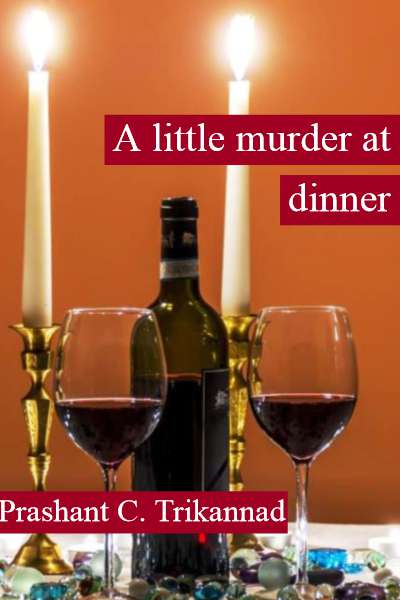
Then, last month, I read about a short story contest at Juggernaut Books, a popular Indian writing platform where I had previously published an atmospheric tale set around a murder mystery, titled A Little Murder at Dinner. I retrieved my western story from the recesses of D drive on my computer, scaled it down to a little over 2,000 words, got the family to proofread the story, and uploaded it on the Juggernaut website. As of writing this post, the results were yet to be announced.

The story begins in Kalbadevi, an old neighbourhood of Mumbai named after the Hindu goddess Kalbadevi. The area has an old-world charm and is known for its wholesale markets, usually bustling with activity six days a week. I worked along its periphery for many years.

This is how The Sheriff of Kalbadevi begins.


Friday night descended on Kalbadevi like any other summer night, the weather still unforgiving. Long after the Indian sun ducked into the Arabian Sea, the old neighbourhood of Mumbai was enveloped in a haze of April heat and dust. Red earth rose and swirled in the air, settled down, and rose again.  
Kalinga sat hunched on his horse under a yellow streetlight. He blew smoke from a cigarette and looked around him with a sense of boredom. There was little movement on the intersection of Princess Street and JSS Road. Two young cowboys on horseback were riding out, back to their ranch or maybe to the seafront on the other side of town, to meet their girlfriends. A woman hurried across the street with her young son and disappeared round the corner of a dilapidated building. Shopkeepers and roadside hawkers were closing business for the day. A group of weary traders vanished behind a tobacco-stained curtain into a country liquor bar. When they staggered out, they would be men no more. He eyed them with distaste.

And here is a significant passage appearing towards the end.

The four gunmen stared in disbelief as two six-guns appeared magically in the sheriff's hands and spit fire simultaneously. They didn't stand a chance. His first bullet caught Balki plumb between the eyes. He died instantly and slid to the ground head first. His horse bolted. Two of his sidekicks got a bullet each in the chest and were thrown off their horses. His fourth bullet sliced through the throat of the last man who slumped in his saddle. It was all over in less than a minute.
Instantly, a new legend was born and it'd travel miles and miles, just like all of his fabled gunfights of the past.

If you're tempted to read the full story, then please click here. I hope you like it. I had fun writing it, partly because it was an original idea.

And if you're still around, you may also like to read A Little Murder at Dinner and the related Editor's Pick of the Week interview Juggernaut Books did with me in June this year.

September 25, 2018

Book Review: Rain on the Dead by Jack Higgins

I will give you my verdict right away. Rain on the Dead (2014) is one of the most disappointing Jack Higgins novels I have read.

The British writer's 76th action thriller features a familiar cast of anti-terrorism veterans: the legendary former IRA gunman Sean Dillon (in his 21st appearance); his boss, General Charles Ferguson, who heads a secret intelligence unit reporting to 10 Downing Street; Captain Sara Gideon, a decorated Afghan war veteran; Major Giles Roper, a wheelchair-bound technology wizard; and Billy Salter, a gangster-turned-MI5 agent, along with his gun-handy uncle Harry, who runs a dockside pub.

(As an Amazon Associate I earn from qualifying purchases.)

Rain on the Dead by Jack Higgins book cover
While those are good reasons to read the book, a weak story and an even weaker plot are compelling reasons to give it a miss. Unless, like me, you're a die-hard Jack Higgins fan who will read anything by the man who gave us such gripping novels as The Last Place God Made (1971), A Prayer for the Dying (1973) and The Eagle Has landed (1975).

Rain on the Dead begins with a failed assassination attempt on the charismatic former US President Jake Cazalet at his estate on Nantucket, an island off Cape Cod, Massachusetts. Unfortunately for the two Al Qaeda-backed Chechen gunmen, Ferguson and his team happen to be visiting Cazalet at the time and foil the plot masterminded by a faceless figure known only as the Master. Not very original and not very scary either.


From there, the action shifts to Drumgoole in Ireland, Paris and finally London, as Ferguson's team thwarts repeated attempts to kill Cazalet. Frustrated by these failures, the Master, who reports to some kind of grand council, hires more desperate men, including rogue special ops soldiers, to eliminate Dillon, Gideon and the others. They fail too.


Rain on the Dead by Jack Higgins book cover
Two more things kept me from enjoying the novel.

The writing, peppered with dialogue, often felt amateurish. Preposterous as it may sound, I even wondered whether the book had been ghostwritten. The narrative lacked depth, the conversations were at times school-grade, and there were even a few typos. This was not the Jack Higgins I grew up reading.

Then there is Sean Dillon himself. His role during the Troubles in Northern Ireland continues to haunt him, as it does many of Higgins' former IRA protagonists. Though still respected by his allies and feared by his enemies, Dillon is clearly past his prime. Maybe it was intentional. Here, he plays a largely supporting role, rarely doing more than turning up with his Colt .25. Instead, the brave Captain Sara Gideon and the young, reckless Billy Salter take centre stage as they hunt down the shadowy Master before he can get anywhere near Jake Cazalet, who first appeared in The President's Daughter (1997).  


So, will I stop reading Jack Higgins? Never. I still have many of his novels waiting on my shelves, and I'm certain most of them will remind me why he remains one of my favourite thriller writers.

January 18, 2018

Book Review: Merrick by Ben Boulden

"Thief, gunman, killer. A hero you'll hate, but root for anyway."
 
Every time I watch a heist movie or read a story about an armed robbery, the same thought crosses my mind: Something's going to go wrong. No matter how meticulous the planning, things don’t always go as intended.

That's exactly what Merrick—a tough outlaw with a conscience and the hero of this fast-paced Western short story by 
by Ben Boulden—discovers when he joins forces with an old partner to ambush an armoured wagon in Texas and make off with a $15,000 payroll.

Merrick by Ben Boulden book cover
Merrick, who is brought in as a last-minute replacement, is well aware of the risks involved in the venture. Experience has taught him that a holdup is never easy, even if the dough is. Though reluctant to accept mastermind Clarence Tilley’s offer at first, the .44 Remington wielding outlaw cannot resist the lure of $15,000 and the prospect of moving to the California coast to live the good life.

But Merrick's getaway plan is shattered when Spider Robison, a particularly vile, greedy and trigger-happy gang member, double-crosses his accomplices, clubs Merrick over the head and makes off with the loot. After regaining consciousness, Merrick sets out to hunt Robison, not so much to seek revenge as to retrieve his rightful share of the haul and be on his way.

Merrick is not the quintessential Wild West outlaw. He is an outlaw alright but one with a conscience—a man willing to break the law, yet unwilling to cross certain lines. Tough, dangerous and quick on the draw when he has to be, Merrick also possesses a vulnerability, a sense of fair play and justice, and perhaps even compassion, qualities that set him apart from others of his kind.

At just 25 pages, Merrick is a cracker of a Western that fans of the genre will relish. Its simple but engaging plot—a stage robbery gone wrong—reminded me of the pocket-sized black-and-white Western comics I read in my youth. I could almost see each scene unfolding as a comic-book panel. Merrick would make an excellent comic-book.

I hope Ben Boulden—author of Blaze! Red Rock Rampage (15) and Blaze! Spanish Gold (18) in the Blaze! Adult Western Series—casts Merrick in more short stories, perhaps even a novel or two. I’d like to read more about the Utah outlaw’s exploits in the author's crisp narrative style. 

January 03, 2018

The books I added to my shelves in 2017

I bought fewer than a dozen books and ebooks in 2017, and intentionally so. It was in keeping with my resolution to read as many books as I could from my collection of 100-odd paperbacks before buying new ones. The plan did not quite work.

Even so, there were a few acquisitions during the year that I was especially glad to have made.

Past Tense by Margot Kinberg book cover
Author Margot Kinberg, who blogs about crime fiction at Crime Writer Margot Kinberg, very kindly sent me a signed copy of Past Tense, the third novel in her mystery series featuring ex-cop Joel Williams. Now a professor in the Department of Criminal Justice at the fictional Tilton University, Williams is an affable and unassuming sleuth with a knack for sniffing out clues. Past Tense is an engaging campus mystery. You can click here to read the review.

Blaze! Red Rock Rampage by Ben Boulden book cover
Ben Boulden's debut novel Red Rock Rampage, #15 in the Blaze! Adult Western Series, introduces J.D. and Kate, a husband-and-wife team of gunfighters, in an action-packed tale told at a brisk pace. I reviewed the book and interviewed Ben here. I will also be reviewing his 25-page Western short story Merrick (since reviewed). You can learn more about Ben and his work at his blog Gravetapping.

Sudden Strikes Back by Frederick H. Christian book cover
During the year, I was lucky enough to track down three out-of-print Sudden paperbacks, my favourite Western series created by British author Oliver Strange. One of them was Sudden Strikes Back by Frederick H. Christian who wrote five Sudden novels after Strange's original ten. That brought my collection to Sudden novels, which I have been reading and rereading since the 1980s.
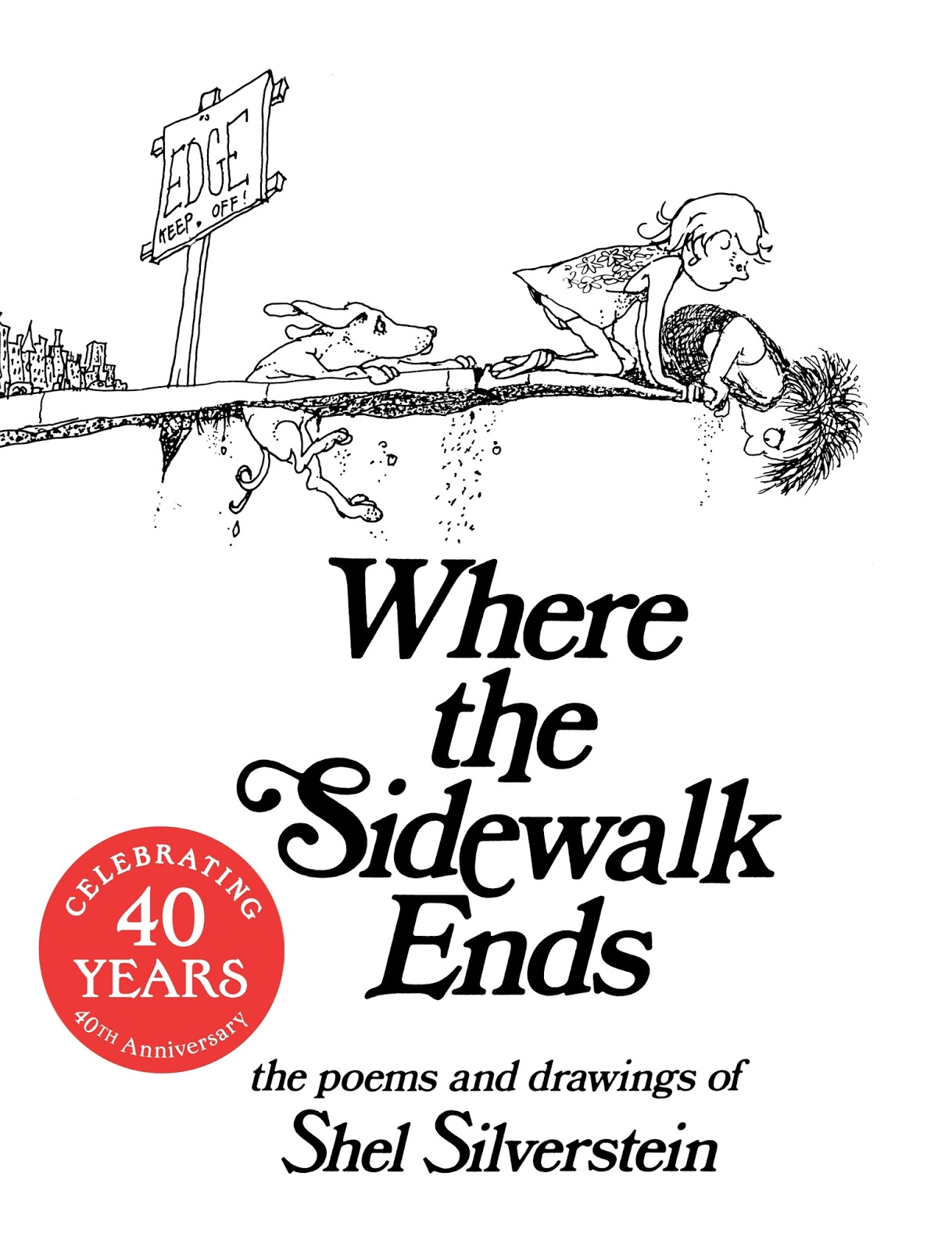
Where the Sidewalk Ends by Shel Silverstein book cover
Finally, a friend and colleague gifted me a lovely hardback edition of Where the Sidewalk Ends, Shel Silverstein's delightful collection of children's poems and illustrations. Silverstein once said he never studied the poetry of others and instead developed his own "quirky style, laid back and conversational." It shows. Where the Sidewalk Ends is one of those rare books that makes you want to put pen to paper and try writing a few verses yourself.

(As an Amazon Associate I earn from qualifying purchases.)

Sudden Makes War by Oliver Strange book cover
 Sudden Rides Again by Oliver Strange book cover 

December 31, 2017

Nothing much happened in 2017

2017 was probably my worst year of reading and writing in recent memory. I read very few books and short stories, and reviewed even fewer on this blog. Personal and professional commitments took up most of my time, while the daily commute became increasingly stressful, leaving me with little energy to read or write. 

As the year wore on, my visits to other blogs declined. That was the one thing I missed the most. But a new year, as Calvin tells Hobbes, is a "new beginning" full of "new possibilities," and I look forward to reconnecting with fellow readers and bloggers. In fact, that's the first thing I'm going to do in 2018.

(As an Amazon Associate I earn from qualifying purchases.)

Godless TV drama series
I watched quite a few films and television series during the year, many of them Netflix originals. I particularly enjoyed Godless, a fine western, and Alias Grace, a psychological drama based on Margaret Atwood's novel, which I still haven't read. Beasts of No Nation, about a child soldier in a war-torn African country, was disturbing, though I felt Idris Elba's character could have been better developed.

For some reason, I also binge-watched Jason Statham's crime films on Netflix. They reminded me of the hard-boiled thrillers I enjoy reading. A couple of them, especially The Italian Job and The Bank Job, felt as though they had come straight out of a James Hadley Chase or Lionel White novel.


Another documentary I enjoyed was Minimalism: A Documentary About the Important Things. There was nothing particularly new about its central idea—mystics have preached "less is more" for centuries—but it served as a useful reminder. To be honest, I've been hoarding books when I should have been reading them and giving away those that no longer deserve a place on my shelves.

Alias Grace TV drama series
On the writing front, well, I'm still writing—or struggling to, thanks to time constraints and the occasional bout of what we call writer's block, which is probably just an excuse not to write and watch a film instead. I have unfinished short stories, a novel I've only recently begun, and a work of nonfiction that I hope will make people feel good about themselves. I intend to persist with all three in 2018, write every day and work to deadlines.  


One bright spot during the year was the publication of my first short story, A Little Murder at Dinner, on Juggernaut Books. It's an atmospheric tale about a police officer and his wife, set against the backdrop of a double murder.

So that's how the year was. Not much happened. But I hope to make things happen in 2018, particularly where my writing is concerned.