May 18, 2010

Comics to cinema: journey of the superhero

Superman, Batman, Spider-Man, Daredevil, The Hulk and Iron Man…

These are the initial six superheroes from the DC and Marvel stables whose transformation from their first comic book appearance decades ago (covers on the left) to their big screen debut decades later (posters on the right) has left readers and viewers asking for more.

The box office craze for superhero movies started with Richard Donner’s Superman in 1978 where the late Christopher Reeve played ‘The Man of Steel’ to perfection. He was equally convincing as Superman in the three sequels that followed even though the storylines did not match up to his super feats. Brandon Routh acted well in Superman Returns in 2006 but was nowhere close to Reeve’s portrayal of Clark Kent/Superman—a role that began and ended with Reeve. R.I.P.

Ditto for Batman, though I prefer Val Kilmer as ‘The Caped Crusader’ in Joel Schumacher’s 1995-released Batman Forever over Michael Keaton in Tim Burton’s 1989 film Batman. If you have read Batman comics, you will easily pick Kilmer as Bruce Wayne/Batman over Keaton and the two other contenders, George Clooney (Batman & Robin, 1997) and Christian Bale (Batman Begins, 2005, and The Dark Knight, 2008). Bale comes a distant second.
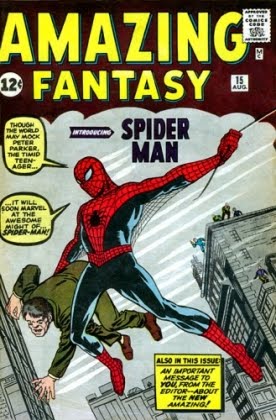
Tobey Maguire just doesn’t become Peter Parker in the Spider-Man film series directed by Sam Raimi in 2002, 2004 and 2007. His portrayal of ‘The Amazing Spider-Man’ was as weak as Keaton’s Batman. They are both okay as long as they are both wearing their masks. Don’t ask me why.

The one-film Daredevil starring Ben Affleck who plays the suave Matt Murdock, the blind lawyer by day and masked vigilante by night, was directed by Mark Steven Johnson and released in 2003. The role of ‘The Man Without Fear’ suited Affleck but then he has no competitors. The first half-hour of the film, where a young Murdock who lives with his father, boxer Jack Murdock, in the Hell's Kitchen neighbourhood of New York City and is blinded by a radioactive substance, is worth every rupee spent on popcorn.

Director Ang Lee turned ‘The Incredible Hulk’ into an animated cartoon character in The Hulk released in 2003. Fortunately, Louis Leterrier, who directed The Incredible Hulk (2008) with seasoned actor Edward Norton in the lead, salvaged the character of the green giant and did justice to “Hulk is the strongest there is…” I thought Eric Bana was a trifle more convincing as Dr. Bruce Banner and his alter-ego The Hulk in the Lee film than Ed Norton. This one’s still open to debate, though.

Iron Man, the latest in the superhero sextet, is hugely entertaining, both for its super visuals and sounds as well as the super performance by Robert Downey Jr. You might not agree with the choice of the swashbuckling RDJ as Anthony Edward Stark or The Invincible Iron Man in the two versions directed by Jon Favreau and released in 2008 and 2010, but you got to admit, however grudgingly, that he does justice to the armoured man’s role. More power to Iron Man’s heart!

May 12, 2010

King Anand reigns over the chess board

Viswanathan Anand of India did his country proud by retaining the world chess championship on May 13, 2010. He defeated challenger and former world champion Veselin Topalov in a tight 12-game contest held in Sofia, Bulgaria.

Anand, who hails from Chennai, the capital city of the southern state of Tamil Nadu, sealed his fourth title win with a 6.5-5.5 score over Topalov of Bulgaria.

"It is certainly the toughest match I have ever played. I can't recall another experience like this," the Indian press quoted Anand as saying.

The 40-year old Indian grandmaster had won the world championship in Tehran in 2000 under the knockout system and held the title until 2002. In 2007, he reclaimed the throne by winning the double round-robin world championship tournament in Mexico. He successfully defended the title in the match against Russia’s Vladimir Kramnik which was held in Bonn, Germany, in 2008.

The Anand-Topalov match, organised under the aegis of FIDE, the world chess federation, carried total prize money of €2,000,000.

Over the past two decades, Anand has been singularly responsible for sustaining—and creating new—interest in the game of chess among youngsters all over India.

Photos: http://www.fide.com/
DIVERSION

In the aftermath of 13/12 & 26/11

In the days and weeks immediately following the December 13, 2001, terrorist attack on the Indian Parliament building, New Delhi nearly went to war with terror sponsor Pakistan. Hundreds and thousands of soldiers were amassed on either side of the 3,323 km (over 1,000 miles) India-Pakistan border. The people of India were convinced that their “iron willed” Prime Minister, Atal Behari Vajpayee of the Bharatiya Janata Party, would take the battle right into Pakistani territory to teach Islamabad a strong lesson and destroy its state-backed terror apparatus. Nothing of the kind happened.


As the United Nations called for restraint by both sides, the West, led by America, arm-twisted the ruling BJP-led National Democratic Alliance government into backing off, after months of military standoff. By October 2002, the war clouds had pretty much disappeared.

Seven years later, on the night of November 26, 2008, ten gunmen from Pakistan attacked the heart of Bombay and left hundreds dead and wounded. Nine of the terrorists were gunned down. The tenth, Ajmal Amir Kasab, was caught alive and, two years later, sentenced to death.

Since that fateful night, one question has continued to trouble Indians everywhere: would 26/11 have happened at all if India had gone to war with Pakistan in 2001? Many people think not.

The idea of war with Pakistan—to once and for all end Islamabad’s 60 years of mischief—is both appealing and appalling. The latter because you have to think at least twice before going to war with a nuclear-armed, trigger-happy, back-to-the-wall country that appears to be run by both politicians in Islamabad and terrorists in Waziristan.

Still, the cry for an armed conflict with Pakistan is not without some logic. That is, if you look at it in the context of what America did soon after 9/11—going after the perpetrators in distant Iraq and Afghanistan. Or Israel, which, in spite of being surrounded by hostile Arab neighbours and several thousand square kilometres smaller than India’s tiny southern state of Kerala, regularly bombs Palestinian territory without so much as a blink of the eye.

But then, the United States is a superpower, India is not even a full-scale regional power yet. On the other hand, Israel is dealing with a far less powerful ‘enemy’ than India and it has the backing of Washington to do what it likes with the Palestinians. The thing is that if you put Israel in India’s place, Tel Aviv's response to repeated acts of terror would have been much the same: bomb them.

If Prime Minister Vajpayee decided against war with Pakistan after 13/12, Prime Minister Singh felt the same way post-26/11. Both men knew the gravity and consequence of a war that neither country might have won decisively. Both had calculated the huge costs of war and its impact on India’s booming economy. Both were probably unsure of international support, mainly from the US, China, EU and Japan. And both were aware of the serious implications of an exodus of Pakistani refugees into Indian territory.

So if not war, then what? Did the two wise men have other credible options, apart from imploring the global community, to bring Islamabad to heel on its sponsorship of terrorism?

They did but almost none were tried. Mainly, declare Pakistan as a rogue and terrorist state; freeze diplomatic relations with Pakistan; recall India’s envoy to Islamabad and send back Pakistan’s envoy to New Delhi; possibly, destroy the terror camps in a limited conflict; censure Pakistan in every international forum; halt all peace talks indefinitely (at least this happened after both the attacks); harden our stance on Kashmir; seek Pakistan’s suspension from SAARC and ASEAN; sever trade and economic ties, including import and export of all goods and services, except medical and humanitarian aid; stop giving visas to politicians and businessmen from across the border; and ban cricket and other sporting ties with Pakistan (yes, that too).

While these measures would have pinched India, they would have most certainly hurt Pakistan. The question is: why didn’t India exercise these options soon after the Parliament and Bombay attacks? With a full-scale war no longer a viable option, why did the Vajpayee and Singh governments not challenge Pakistan through diplomatic, political and economic means? Indian citizens, who are sitting ducks for terrorists even now, have a right to know why.

April 07, 2010

Scrabble sacrilege

Nothing is sacred anymore, not even Scrabble. One of the world's most popular board games, Scrabble is doing a 360° turn. News has come in that US toy giant Mattel, which owns the game and has sold an estimated 150 million sets worldwide, is spicing up the board game in a way that already has traditional lovers of the game scrabbling for cover and screaming "double letter" and "triple word" cuss words.

Mattel is reportedly changing the rules of the game, invented by architect Alfred Mosher Butts in 1948, to allow the use of proper nouns, like names of places, famous people and companies.

As a story on The Washington Post website noted, "To Scrabble purists, this would be like lowering the height of the baskets in the NBA, or doing away with the net in tennis. Suddenly, any idiot could spell, say, "Bjork", and score a quick 18 points."

So, for every "Beyonce", you will have a "Barack". Ditto for "India" and "England". Or, "Pepsi" and "Walmart". Throw out the dictionary and bring in the encyclopedia!

But wait, it gets worse. It seems players can spell words backwards and upwards, and even place words unconnected to letters already on the board. "Unconnected", did they say?

Here's my own rule, No.3: two players can now sit facing each other across one board and play at the same time without having to play with each other. Or, make that two pairs of players without one having to play with the other, if you like. Is Mattel listening?

The toy company is dead serious about savaging the 62-year old game’s rules, the first time in its history. Mattel expects the changes to add a "new twist" to the board game. "We believe that people who are already fans of the game will enjoy the changes and they will also enable younger players and families to get involved," The Telegraph of UK quoted a Mattel spokeswoman as saying. Thankfully, Mattel will continue to sell the board game with the original rules.

Even if they don't, you and I can still play Scrabble the traditional way.

Recommended article: Beyonce on a triple-word score? Scrabble to upset purists with 'dumbing down' rule change at www.dailymail.co.uk/news/article-1263658/Scrabble-upset-purists-proper-noun-rule-change.html#ixzz0kPAGYTZi

February 17, 2010

Friday Night Comics Strips: Henry


The Little King by O. Soglow


Mutt and Jeff by Al Smith


King Aroo by Jack Kent

February 09, 2010

Don’t let boredom kill you

Can you actually die of boredom? A new study by researchers at University College London claims that it can. The findings reveal that those who reported feeling a “great deal of boredom” were more likely to die young. This is because those unhappy with their lives turn to unhealthy lifestyle habits such as smoking, drinking and overeating, thus, cutting their life expectancy, scientists explain. The study found a link between boredom and heart disease.

Fortunately, boredom, unlike depression, is not an illness and can be easily treated, with a non-medical prescription. Over a period of time, however, boredom can lead to depression. But that’s another story.

The findings are as relevant to India and elsewhere as they are to the UK where the study was conducted.

More and more people in India, particularly the young and the frantic, are complaining of boredom than ever before. These days you are more likely to hear people in their teens and twenties repeatedly say “I am so bored” or “My life sucks!” It’s also become fashionable to parrot these words. Either way it’s not a very healthy sign.

Boredom—the feeling of being bored or uninterested—comes from a total lack or absence of mental and physical activity or occupation. The irony is that even if you are doing something, you could still be bored, simply because you find the task on your hands dull, repetitive or tedious.

Those who complain of boredom have no right to say they are bored. It implies that they can find enough things to do if they want to, but they choose not to. In other words, they are plain lazy or preoccupied with themselves actually doing nothing. Imagine that!

I know people, on the other side of boredom, who complain of having too little time to do all the things they want to do. They must wish they could buy other people’s boredom, like carbon credits.

On a simple note, you can break boredom by forcing yourself out of your self-imposed mental stupor and cultivate existing or new hobbies and creative pastimes, turn to the mystics, be among friends, or take up causes with a purpose. This will help you pull yourself up, not to mention those putting up with you. Boredom can be infectious sometimes.

Boredom is also often associated with loneliness or emptiness, but it need not necessarily be so. If I remember correctly, it was Khushwant Singh, the celebrated Indian author and columnist, who once said, “I may be alone, but I am not lonely.” That is so true.

Remember, there’s always plenty to do, there’s never enough time to do it. So, be a bore if you like but don’t be bored.

February 08, 2010

DIVERSION

Barack Obama, one year later

It's a little over a year since Barack Obama created history and already the shine and gloss is wearing off his presidency. Suddenly he's looking like any other US president.

America's first African-American president steamrolled into the White House on the grand slogans "Change we can believe in" and "Yes we can". Just twelve months in the Oval Office and everyone, fans and foes alike, are asking "Can he really?"

The Obama presidency was nothing short of a miracle or two. The first miracle happened when he defeated John McCain, though that was expected. The second, his promise of change, is still awaited by Americans and the rest of the world.


The question is not whether he wants to bring change as he said during his election campaign—of course he does, who doesn't want to play god—it's whether he can make a change that Americans can believe in.

For now, the odds are against Obama and it will be a while before he can bend down and pick up the baton of change and dash to the finish line. His popularity ratings have dipped. The US economy is yet to come out of recession. Unemployment is still on the rise. His healthcare reforms are under fire, and pending. He shocked many by sending more arms and men into Afghanistan. Last year he refused to meet the Dalai Lama to appease China. He tried to foist a last-minute climate change deal on the developing world. In a major political upset last month, the Reps snatched the late Ted Kennedy's Senate seat in Massachusetts, held by the Dems since 1952. And there's plenty where all that came from. Clearly, Obama has a big fight on his hands.

There is palpable disappointment amongst many who actually thought Obama would, like some medieval conjuror, make hope and change materialise out of thin air, and that everyone would live happily ever after. Nothing of the kind is going to happen. Obama may be an extraordinary president, but don't forget he is also an ordinary person, subject to human frailties that are common to you and me. He is more likely to fall before he rises, more likely to fail before he succeeds. But, the seriousness of intent and purpose of his presidency cannot be mistaken.

The hype and hoopla surrounding Barack Obama's spectacular victory will fade in due course of time. What will stay alive in public memory, though, is how he conducts himself, both as a president and a person, over the remaining three years of his term. From here on, should he fail to live up to the great expectations that have fallen to his lot, there will be neither hope nor change—probably not even a second term.

Recommended article: The Muddled Selling of the President at www.nytimes.com/2010/01/31/weekinreview/31stevenson.html