August 14, 2013

For SCREAMing out loud

The purpose of this magazine is to reintroduce you to horror...long LOST horror...long BURIED horror...HORROR that OUR era has never really KNOWN...
— From Prologue to a Scream

Vol.1, No.1, August 1973

I have absolutely no clue about this horror magazine I discovered on Archive and promptly downloaded and read in one go. Known as Skywald Horror-Mood Magazine, the 68 pages are edited and written by Alan Hewetson and published by Israel Waldman and Herschel Waldman. Wiki says, "Skywald Publications was a 1970s publisher of black-and-white comics magazines, primarily the horror anthologies Nightmare, Psycho, and Scream. It also published a small line of comic books and other magazines."

The contents page

I liked everything about the first issue of Scream from the imaginative cover and contents page and the black-and-white illustrations that narrate short disjointed macabre tales to the humour behind the horror and the description of Alan Hewetson as "the insane founder of the lunatic Mood-Team and corrupt editor-writer for Scream magazine."

If you know more about this magazine, SCREAM in comments.

Meanwhile, you can download it right here. You'll find other issues too.
August 13, 2013

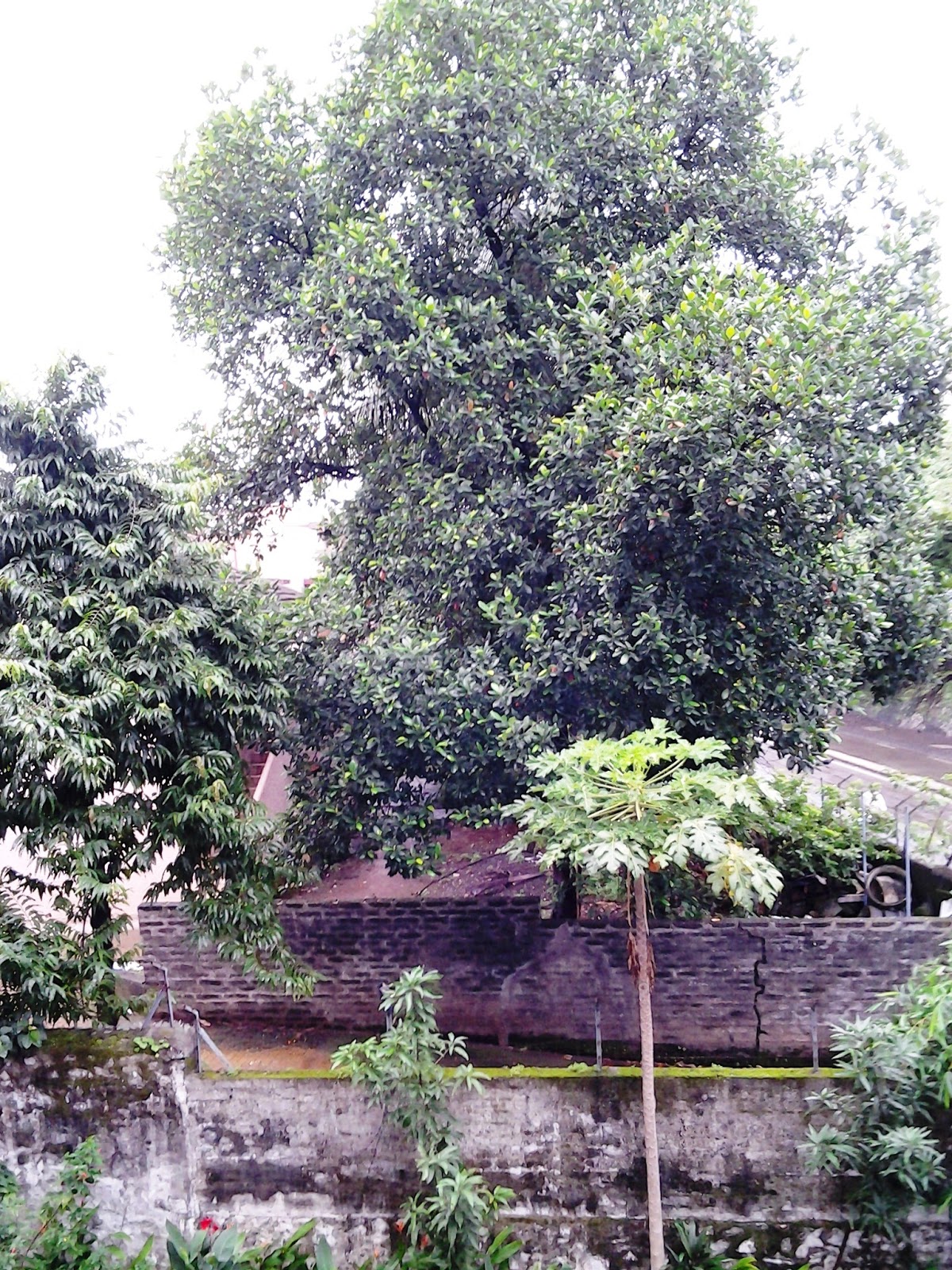
A balcony with a view...


The tree on the right with the long trunk is the Papaya tree (papaw or pawpaw). The one on the left is the Ashoka tree which is steeped in Indian culture and history. Ashoka means “without sorrow” in Sanskrit. The large tree behind the Papaya and Ashoka trees is the Jackfruit tree and eating its abundant fruit are the inmates of the Home for the Aged, which holds an annual charity sale of books and other items. I live on this side of the wall. Jackfruits are heavy. In the olden days men aspiring to build their bodies lifted jackfruits and grinding stones to develop their biceps. This was before gyms and weights became affordable.  

...and a blanket of greenery


The thick foliage you see in this picture is actually trees growing in the sprawling courtyards of two convent schools opposite my house. They have been there long before I moved into the area.

The annual rains bring these trees alive, even in the urban jungle called Mumbai.


Photos: © Prashant C. Trikannad

August 12, 2013

The Vulture is a Patient Bird by James Hadley Chase (1969)

He married because he wanted a son to carry on his name. He got his son: Max Kahlenberg. There was a real mystery about the birth. No one except the doctor and the nurse saw the baby. There was a rumour it was a freak...some even said it was a monster.

A replica of my copy of the book
The vulture is a patient bird. It does not kill its prey. It waits for another predator to kill and then swoops down on what is left of the carcass.

Max Kahlenberg is the vulture in Chase’s forty-sixth thriller. He is rich, reclusive, unscrupulous, crazy, and a compulsive art thief. He has a network of thieves who steal the finest art works from the world’s greatest museums including the Vatican. His ill-gotten treasures are stored in his secret underground museum in the hostile Drakensberg mountains in South Africa. He lives above the museum, in a sprawling mansion surrounded by 100 square miles of jungle and guarded by Zulu warriors.

The wheelchair-bound Kahlenberg has another secret that no one knows: a grotesque deformity below the waist that compels him to live by the remote from the time he wakes up in the morning.

The human vulture waits patiently for the three men and a woman who are on a secret mission to his house to retrieve a famous poison ring he stole from a rival collector.

The only thing common between the three men is that they have served a number of years in prison.

Garry Edwards is clearly the main hero. He is a tall and powerfully-built 29-year old helicopter pilot and car expert, currently out of work.

Kennedy Jones is a safari and wildlife expert from Johannesburg. Like Garry, he is a rather nice fellow with straggly moustache, long sideboards, and a pleasing smile.


Lew Fennel is the most vicious of all. He is short and heavily built like Rod Steiger with white hair, grey shifty eyes, and thin lips. An expert safe-breaker, Fennel is notorious for robbery, violence and unpremeditated murder, currently on the run from an underworld leader he betrayed.

The woman is Gaye Desmond, a sensuous and beautiful American freelance model employed by Armo Shalik to carry out secret operations. She is the Trojan horse.

The four ‘agents’ have been hired by Shalik to steal the ring from Kahlenberg. Of Armenian or Egyptian descent, he is a small, fat man with chubby hands and beady eyes, who undertakes difficult assignments for the high and mighty—from corporate barons to Arabian princes, art collectors to Texas oil millionaires, and shipping tycoons to powerful industrialists.

James Hadley Chase
The secret ‘operatives’ don’t know that Kahlenberg is expecting them with Hindenberg, his fully-grown cheetah, and the fierce Zulu warriors by his side. Nor do they know that he has a distorted sense of humour and has planned a little game for the thieving quartet.

The Vulture is a Patient Bird is not exactly a crime story that most Chase novels are famous for. Rather, the plot is a red herring in the mould of a Frederick Forsyth story. However, the story is unconvincing as the experienced combine of Garry, Jones, Fennel, and Gaye walk into a trap they ought to have suspected from the start. The suspense is tame and the style not as absorbing as some of Chase’s other novels.

There is a fair amount of humour, mainly due to the lighthearted Jones, and some tense moments as the wicked Fennel lusts after Gaye who in turn lusts after Garry, handsome in a rugged way. But that’s about as much sex as you’ll find in a Chase book notwithstanding the semi-nude women on the covers in particular editions of his novels.


Chase’s characters are usually not as intense or powerful as you might find in, say, a Mickey Spillane or Dashiell Hammett hardboiled novel. They’re often ordinary people leading ordinary lives, the kind you might find in a Harold Robbins pulp novel. The narrative is simple and the plot unsophisticated. A Chase novel is entertaining and can be read in less than two hours.

Born René Lodge Brabazon Raymond, English writer James Hadley Chase was a bestselling author, especially in Third World countries like India, from the 1960s through 1980s. In fact, he was the son of a colonel, a veterinary surgeon, in the colonial Indian Army. I read all his novels in college. Many of these had cops as main characters and the line “I gave him my cop look” was made famous by Chase. He was a prolific writer churning out a novel a year, sometimes two in a year.

You might want to read this book only if you’re a James Hadley Chase fan.

August 06, 2013

Happy Birthday!

I’m going to blow the four candles, my own trumpet, and cut the cake right away. 

The 3Cs completes four years this month. I’m not sure of the exact launch date because I deleted my first post some months ago. But I think it was August 24, 2009. It was a Monday, probably a rainy day. Since then I have removed numerous posts that didn’t quite fit in with the blog’s new identity, not that it has one. I narrowed down my interests to a few like books, films, and music, in the hope that a refined and redefined blog will have focus and garner more votes, honours, awards, laurels, and medals. It did more than that. It brought me in contact with a blog’s most important asset—other bloggers—most of whom are established writers or experts in literature, cinema, and music, and who have been gracious enough to visit this blog and comment with unerring regularity. Today, they're my blog friends and I’m richer for knowing them.

Over the past four years the 3Cs has accumulated 404 posts not counting the deletions, 2,066 comments that include my replies, and 176,306 visitors, hopefully, minus my own pageviews.

It has been a fun journey so far and I intend to go on for as long as there are books to be read, films to be watched, and music to be listened to.

I will leave you with that first post I wrote forty-eight months ago.


The beginning of a journey

Welcome to Chess, Comics & Crosswords! This blog is not going to be just about the 3Cs. It's going to go far beyond these happy pursuits. To give you a fair idea, it will traverse the spiritual and the mundane, in unequal measure, and everything else in between. It will convey news and views, stories and histories, verses and rhymes on topics that inspire, enliven, and even provoke. Hopefully, what you read will touch you, make you smile, even laugh, make you sad and angry, and exult... Maybe it will do nothing. Never mind, so long as you come here often—to read, reflect, and react.

From the Word file

August 05, 2013

All the Lonely People by Martin Edwards (1991)

Your mind’s playing tricks, Harry Devlin said to himself.
As he reached for the front door key, he could hear a woman laughing inside his flat.


A woman he can hear laughing inside him long after she is stabbed to death in a deserted alley and long after he begins a desperate hunt for her killer.

Lawyer Harry Devlin is the prime suspect in the murder of his beautiful wife, Liz, but it does not discourage him from going after Liverpool mobster Mick Coghlan whom he suspects of killing the woman he still loved.


Liz had left Harry for Mick. One day she leaves Mick and returns to Harry’s flat where she seeks temporary shelter from Mick.


Harry is bitter but not unforgiving. He welcomes Liz “back into his life” as he is still crazy about her and dreams of a new life together. The next day she is found dead.

The lawyer for “small time crooks, desperadoes and drunken losers,” as British lawyer and crime writer Frances Fyfield describes Harry Devlin in her introduction, drops everything and scours the lower side of Liverpool for the man who killed Liz.

Harry is not a professional sleuth but his dogged pursuit of the truth behind her mysterious death marks him out as a seasoned detective. His inquiries, often polite and respectful, and his investigations, fearless if reckless at times, reveal to him a side of Liz he’d never suspected.

Wouldn’t it have been better if you’d left it alone and moved on, Harry? You can't help asking as you read and experience his turmoil.

Martin Edwards is an award 
winning writer
British crime writer Martin Edwards has characterised Harry Devlin as a decent man, a people’s lawyer, and a caring, if estranged, husband, perhaps even as the victim in the story. On the other hand, Edwards has taken care not to paint Liz in poor light, regarding her as one misguided in her quest for the good life.

A bunch of oddball characters including friends and felons move in and out of Harry’s investigative path, none more appealing than his next door neighbour Brenda Rixton, an attractive woman with an unhappy past. She recognises Harry’s worth and lends more than a shoulder, helping him cope with the crisis without getting in his way.

All the Lonely People is Martin Edwards’ debut novel and the first in his acclaimed Harry Devlin series. It was nominated for the John Creasey Dagger for best first crime novel of the year. I liked his style of writing, which is devoid of complexity, and construction of the plot, where we move with Harry in every chapter. There are no sub-plots. Everything revolves around the Liverpool attorney. Edwards is simply saying, "This is Harry Devlin. He has a story to tell you," and it's riveting.

I hope to read some of the other novels in the series and find out how Harry Devlin’s widowed character develops.

Martin Edwards is also the author of another series, Lake District Mysteries, featuring DCI Hannah Scarlett and historian Daniel Kind. He has also written standalone novels, short stories, and non-fiction, and edited several anthologies. While he blogs on crime fiction at Do You Write Under Your Own Name? you can learn more about his books at his Website.

Recommended

July 31, 2013

‘Those were the days my friend’

I have published fewer posts this month because of my preoccupation with things which at this point seem more exciting than writing, like reading for the hundredth time all the Asterix and Tintin comics, watching standup comedies on YouTube and The Big Bang Theory, Mind Your Language, and reruns of Friends on television, and experimenting with my new tablet which has become something of an addiction. 

In between these pursuits I have been reading both books and ebooks, though at a slower pace, and listening to music. Hans Zimmer, REM, Peter Frampton, Richard Marx, and Tears for Fears are the current flavours. Next week it will be someone else.

Of the standup comedies I watched, two standups had me laughing all over the place. One was Jim Carrey's mimicking tribute to Clint Eastwood at the AFI Life Achievement Award in 1996 and the other was Ray Romano's parental jokes delivered at a show before Everybody Loves Raymond was beamed into our living rooms. Click on the links and have a good laugh.

Towards the end of his five-minute act, Romano tells us why, given a choice, he'd like to go back to being a three-year old rather than a teenager as most people want to. Apparently, one day he was driving his then three-year old daughter, Alexandra, when he caught her looking out of the car window for 15 minutes, “staring at nothing” in particular. When he asked “Ally” what she was dreaming about, she said, “Candy.” 

"Candy!" Romano cries out in his familiar nasal voice. Do adults ever sit back and dream about candy? What would the middle-aged version of thinking about candy be like? No spoilers. Again, open the link and see for yourself. To the uninitiated Everybody Loves Raymond was based on Ray Romano's life.

The candy of Ally's and our childhood reminded me of the simple pleasures I derived in my own. I came up with 10 things I enjoyed as a kid. Some of these are gone while others are still around, in new avatars that don't look or feel the same.

Rubik’s Cube was a challenge and a frustration at the same time. In spite of studying dozens of DIY booklets carefully, I never got it right. It would raise my blood pressure if I tried it today.


The Phantom cigarettes were the only ones I ‘smoked’ in all my life. They tasted good. I didn’t need nicotine patches to kick the habit. The ‘cigarettes’ simply vanished.

The jigsaw puzzle of the world map got me hooked into the atlas and finding out the capitals of various countries became a pleasant and an educative pastime. I find the atlas as engrossing as a murder mystery.

The Meccano set gave me the earliest indication that I wasn’t cut out for the construction or equipment industry. Everything fell apart. A few nuts and bolts would be missing each time I put away the set. I had better luck building a pyramid against a wall with a crisp, razor-edged stack of cards.

The jumble, which many Indian newspapers by an act of compassion still carry, was fun to solve. Grandparents were fond of it too. It used to appear in the Sunday papers and my English teacher in 7th standard (grade) got us to crack the jumble in his class first thing Monday morning. I used to top the class because I’d solve it over the weekend. He didn’t know that, of course.

What were the “candies” of your childhood or early teens? 

Note: The headline is a popular line from the sentimental song by Mary Hopkin.

July 26, 2013

Five overused words

On July 24, Allied Authors, one of Wisconsin's oldest writing collectives, published an interesting article on five overused words—Then, Also, And, Said, and Was—that "fledgling writers" like this blogger use more than necessary. The piece was written by David Michael Williams, a fantasy/sf writer and Allied Authors member. You can read it at Allied Authors or on the author's website where it first appeared on June 20, 2013.

Out of curiosity I checked the number of times I'd used the five words on this entire page. In 14 posts, not counting this one, I used "Then" 10 times, "Also" 12 times, "And" 308 times, "Said" 3 times, and "Was" 16 times. 

How many "times" does that make?!

A simple Ctrl+F tells me where I'd overused the words "Then" and "Also." I'm okay with the count for "And" as it appears almost everywhere including in words and terms like "Land," "Laurel and Hardy," "England," "Mandrake," and "Demanding." The numbers for "Said" and "Was" across 14 posts seem fair.

The next time I proofread my copy I'm going to keep a finger on "Delete" and ensure that I don't overuse it.