October 19, 2012

VINTAGE PICTURES

Where Next?


Where Next?: The gentleman in the picture is employed in a global banking firm that has forced him to go on a thirty-day privilege leave failing which he forfeits it, a company regulation. So he and his wife are pouring over a world map to decide where to go next on their annual vacation. The woman looks as if she has picked out a destination, perhaps the Maldives or Seychelles in the Indian Ocean. In his Where Next art, I’m not sure if English landscape painter Edward Frederick Brewtnall (1846-1902) meant for the couple to visit either of the archipelagos. But just look at that backdrop! Do they really need to go anywhere when the sea is coming right in to meet them?

Source: Wikimedia Commons

October 18, 2012

BOOK REVIEW

The Murder on the Links (1923) by Agatha Christie

The hangover from last week’s Agatha Christie Week continues well into this one with a look at the mystery writer’s third novel for Friday’s Forgotten Books at Patti Abbott’s blog Pattinase.

‘Yes,’ said Poirot doubtfully. ‘No one who knew would bury a body there unless they wanted it to be discovered. And that is clearly absurd, is it not?’ 

The Murder on the Links is considered to be one of the most gripping mysteries written by the Queen of Crime. Just when you thought you’d wrapped up the murder of wealthy businessman Paul Renauld and nailed the murderer, the Belgian detective works his “little grey cells, always the little grey cells” and produces a real humdinger—the history behind the mystery we’re reading and nothing is ever the same again. And all it takes Hercule Poirot is a little trip to Paris and Coventry.

Poirot and his friend, Captain Hastings, rush to France soon after receiving a distress letter from Monsieur Renauld who claims he is in imminent danger on account of a secret he possesses and requires the services of the veteran detective. Instead of greeting him in his study at Villa Genevieve, Merlinville, they greet his dead body lying face down in a grave on a golf course, a small paper knife sticking out of his back.

‘Mon ami, two people rarely see the same thing. You, for instance, saw a goddess. I—‘ He hesitated.

‘Yes?’

‘I saw only a girl with anxious eyes,’ said Poirot gravely.
 

The suspects are many, from Renauld’s wife Eloise and son Jack, to housekeeper Francoise and maids Denie and Leonie, both sisters, to neighbours Madame Daubreuil and her daughter Marthe, to his secretary Gabriel Stonor and the gardener, Auguste.

The sleuths investigating the murder are equally so, from Monsieur Hautet, the examining magistrate, and Monsieur Lucien Bex, the commissary of police, to Monsieur Giraud from the Paris Surete, to Poirot and Hastings. 

Giraud is a “famous” detective, albeit a cocky and arrogant one. His obvious hostility towards Poirot and a ridiculous desire to be one up over the Belgian sleuth causes him to jump the gun and arrest the wrong man. Not for long, though, as Poirot, the ever-seasoned private eye, is on hand to lay bare the shocking truth behind Renauld’s brutal murder—read mistress and blackmail—and the discovery of a second dead body that was never a part of the original crime.

Poirot’s brilliant deductions open a Pandora’s Box as Renauld’s past life that included murder, a conviction, evasion, tragic love, and a new life all come tumbling out of the closet. A murder that was remarkably similar to his own.

‘A crime almost precisely similar had been committed before. That, when you have two crimes precisely similar in design and execution, you find the same brain behind them both.’ 

My copy of the book
You can’t review Agatha Christie’s books without mentioning a few spoilers and that’s just not right considering that her mysteries are peppered with spoilers from page one. 

I liked The Murder on the Links for the little gems that Christie’s novels are delightfully notorious for.

For instance, in this story Hastings actually falls in love with a mysterious woman known to him only as Cinderella, whom he meets right in the beginning, someone with a seemingly ulterior motive, one that you’d never guess till Poirot reveals "her" role in the Renauld mystery. 


Interestingly, this is the only Christie book I've read where Poirot and Hastings fall out, in a gentlemanly sort of way, over the latter's desperate attempt to shield Cinderella from the probing mind of Poirot and possible suspicion and prosecution for the murder of Monsieur Renauld. To me, this was the surprise element of the mystery. 

‘Because I love you, Cinderella.’ 

She bent her head down, as though ashamed, and muttered in a broken voice, ‘You can’t—you can’t—not if you knew—‘ And then, as though rallying herself, she faced me squarely, and asked, ‘What do you know then?’

The other bit I liked about this novel is the humour. A lot of readers and reviewers of the Dame’s books usually focus on her mysteries and rarely on her funny bone, intelligent and original in its scope. 

Here’s a delectable line: ‘Some of the greatest criminals I have known had the faces of angels,’ remarked Poirot cheerfully. ‘A malfunction of the grey cells may coincide quite easily with the face of a Madonna.’ 

Or the time when he needles Hastings for his roving eye: 'Yesterday it was Mademoiselle Daubreuil, today it is Mademoiselle—Cinderella! Decidedly you have the heart of a Turk, Hastings! You should establish a harem!'

Agatha Christie outshines herself with each successive novel. With The Murder on the Links she outperforms herself many times over. What amazes me about Christie’s writing is her train of thought, her power of deduction, her ability to mystify the reader with intrigues, the placing of clues that are so obvious as to miss them altogether, the subplots that are more fascinating than the main plot, and her mysterious characters, each with his or her own little secret, all leading up to a cracking mystery that leaves you satiated by the end.


Christie is a generous writer: she helps you along with the clues as you read but expects you to sniff them out on your own and lay them out in a logical sequence, just as Poirot expects of Hastings, 'You have a little idea, I see, mon ami! Capital. We progress.'


'Still, one must take crimes as one finds them, not as one would like them to be.'


October 16, 2012

Doordarshan and The Old Fox (Der Alte)

For this week’s Overlooked/Forgotten Films and Television over at Todd Mason’s blog Sweet Freedom, I’m going to let you have a peek into India’s 53-year old national television broadcaster and, as a bonus, one of its earliest English serials. 

Doordarshan logo with Hindi lettering
Television has been around in India since 1959 but the government-owned Doordarshan, or Far Sight, made real inroads into Indian households only in 1982, when DD, as it is known, changed from a transmitter-driven makeshift studio to a national broadcaster that took satellite television from the initial six or seven cities to the entire country.

It was also the year colour television came to India. However, most Indians couldn't afford TV let alone colour TV until mid-1980. Till then, people without their own television invaded the privacy of their neighbours who did, usually at dinner time, and sat huddled around their black-and-white TV sets to watch primetime shows between 8 and 10 pm.

The television set was usually encased in a dark, and sometimes printed, wooden cabinet with sliding doors and supported on four legs, each at a slight angle. It wasn't easy to watch television in those days for the screen would suddenly go all wonky. Thick black stripes zigzagged across it and the only way to straighten out the screen was by banging the side of the television set or switching the power on-off in rapid succession.

The prestigious shows included a popular word-building programme called What’s the Good Word? on Monday, a half-hour telecast of songs from Hindi films every Thursday night, and the weekly Hindi feature film on Sunday evenings. Everyone used to be so excited. Dinner could wait. Those who couldn't let it wait, ate and watched at the same time.


In the 70s and 80s, television in India brought disparate communities together and, no doubt, played a significant role in preserving communal harmony among its teeming millions.

Those were early days but Doordarshan was, surprisingly, swift-footed in bringing foreign television content to India. These were mainly low-budget programmes from Europe, particularly sitcoms from Britain and tele-matches (or tele-games) from Germany. American sitcoms came in much later, in early 1990, thanks to Rupert Murdoch’s Star TV (Satellite Television Asian Region). In many ways, it heralded the third invasion of India, after the Mughals and the British, not counting the trespass by the French and the Portuguese. 

German actor Siegfried Lowitz as Chief Inspector Erwin Köster

DD cast itself in no small glory by also broadcasting two German crime serials—The Old Fox and Derrick—produced by Transtel-Cologne and Telenova Film, respectively, and originally telecast on ZDF, the German television broadcaster. Both serials were created by Helmut Ringelmann, a German film and television producer. I have no idea who he is.

I have no recollection of Derrick but a little reading on the internet tells me that it was about a detective chief inspector and his loyal assistant inspector who solved murder cases in Munich and its surrounding areas.

The Old Fox, on the other hand, is as fresh in my mind as ever.

Known as Der Alte (‘The Old Man’) in German, The Old Fox is a crime drama that originally featured Siegfried Lowitz as Chief Inspector Erwin Köster and a handful of police detectives. Lowitz played the Old Fox from 1977 until 1985 after which the role was assumed by at least three German actors. I believe the serial continues on ZDF.

Herr Köster is a lot like Monsieur Poirot minus the handlebar moustache. They may not look alike, in spite of being short, portly and affable, but they think alike. They solve murder cases from within. As the Belgian detective is wont to say, “The true work, it is done from within. The little grey cells — remember always the little grey cells, mon ami.” It’s a sentiment the Old Fox shares for he, too, dives into the mind of his suspects and unearths the murky truth behind heinous crimes. 


Old Fox is as “humble and unassuming in appearance” as he is crafty and diligent while investigating a case. He often surprises his loyal policemen by solving a mystery in the most unexpected manner; the look on their faces akin to the perplexed look on Captain Hastings’ face after his friend, Poirot, has poured fresh concrete into a case and sealed it. 

Unlike Poirot, though, Koster often jumps into his car with his assistant inspectors and gives chase to possible criminals which, if my memory serve me right, often results in a brief gunfight. In that, the Old Fox braves more danger than the Belgian sleuth. But then, he is a homicide cop who often has to deal with the mafia and cannot afford Poirot’s luxurious pace of cracking cases.

The Old Fox is a gripping crime serial and one of the most realistic police dramas I have seen. Siegfried Lowitz as the soft-spoken Old Fox is superb. I don’t know if DVDs of the series are available but it would be worth your while to check it out. I’m sure you’ll enjoy watching Herr Koster go after the kriminelle.

October 14, 2012

The joy of reading comfort books

In my earlier post on Agatha Christie for Friday's Forgotten Books, Mystica and Yvette commented that Christie's mysteries and the classics, like those by Jane Austen, were “comfort reads,” books they went back to again and again because they genuinely love those books and also in times of hardship.

In stressful situations, people tend to read books that help them relax and take their mind off their immediate problems. It may act as a temporary balm but you look forward to those moments with certain books you enjoy reading more than others; solace reading as you might call it.

I’m not talking about self-help, spiritual, and motivational books. They’re usually the first choice of the undiscerning reader.

How many times have I put down a novel because it was too “heavy” and I was too “stressed” at the time to read even a few pages from it? Good number of times.

I don’t find all the classics relaxing, or comfort reads, at least not the ones I have read or I’m reading currently. A few days ago, I put away Moll Flanders by Daniel Defoe because I just couldn’t focus on the narrative that spoke of a courageous woman determined to put her impoverished life behind her. Yet, some years ago, I couldn’t put down Defoe’s Robinson Crusoe whose humdrum existence on a desolate island did nothing to dampen my enthusiasm to finish the book. I loved Crusoe’s spirit of adventure, guided as he was by his faith in the Creator and the companionship of a dog, fowls, birds, sheep, and goats until Friday came along.

Instead, I picked up the long overdue Harry Potter and the Half-Blood Prince and read the sixth of the series in four days. I enjoyed the book in spite of the many loopholes in it. Among other things Albus Dumbledore’s exit was unconvincing.

I’m tempted to reach out for Deathly Hallows but that’ll happen only if I tire of reading the psychological thriller The Ninth Configuration by William Peter Blatty or the India-centric A Son of the Circus by John Irving. I should finish Blatty’s short fiction, about a bunch of crazy war vets interned by the Pentagon, in the next couple of days though Irving’s 678-page tale of an Indian who is not an Indian but keeps coming back to India might take much longer. Irving’s characters, places and settings are often predictable, but he is one of the finest writers I have read over the past two decades. Hopefully, next up is A Prayer for Owen Meany which, I am assured, is a most absorbing story. 

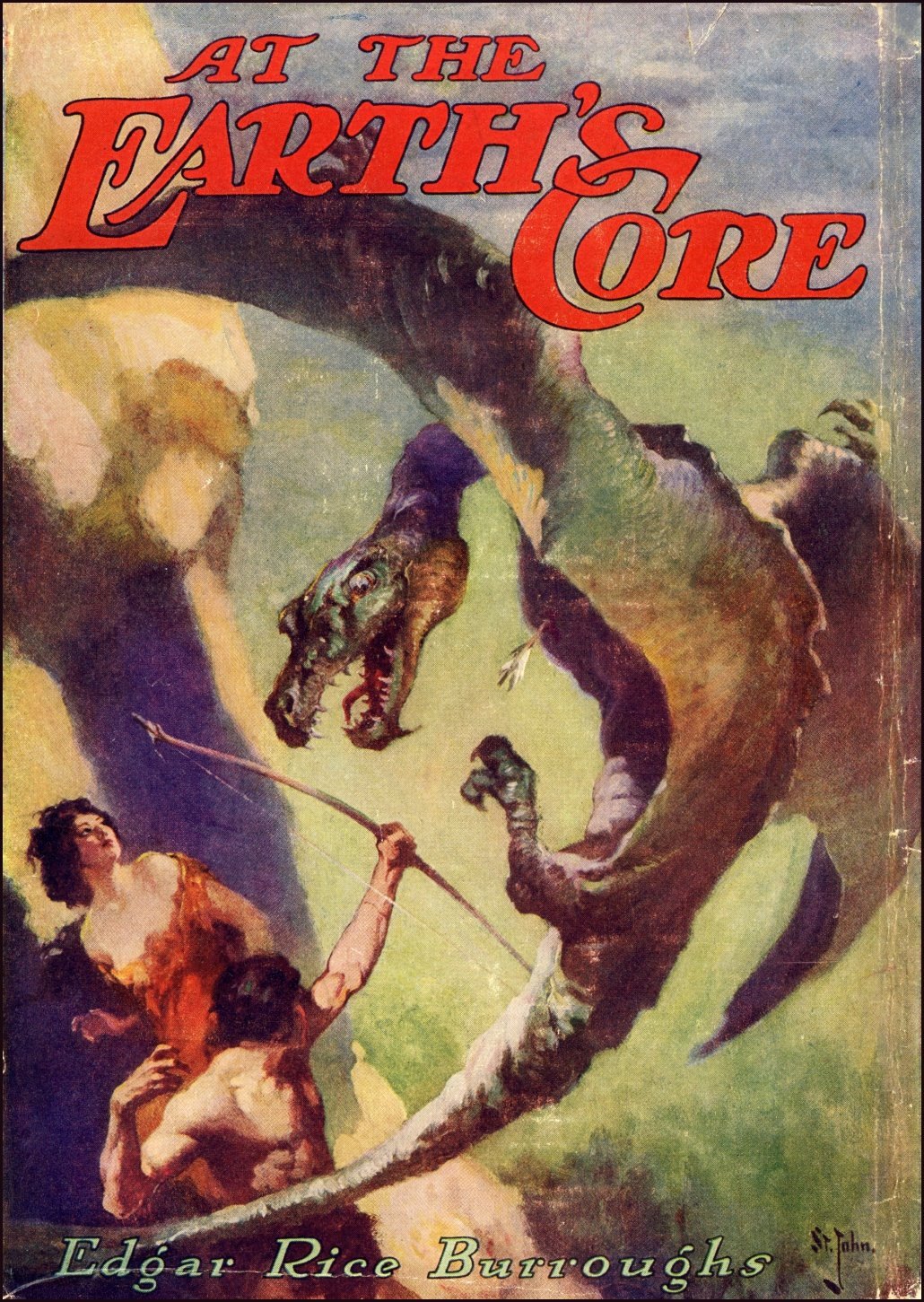
It’s probably a male thing but men usually veer towards more serious genres, such as thriller, horror, sf, fantasy or western, as a form of relaxation. I remember, sometime last year, I put away Jude the Obscure by Thomas Hardy because I was suddenly too tired to read it and picked up At the Earth’s Core by Edgar Rice Burroughs and went underground with Tarzan, into a Jurassic kind of world that was an amazing experience. I eventually finished reading Hardy’s intense tale of the self-sacrificing Jude but found ERB’s fantasy novel unputdownable. A pulp for a classic! Why not? A pulp is a classic for a lot of people.

My reading habits swing like the pendulum, usually before bedtime when I’m most likely to switch over to books that are less taxing on a tired brain. For such an eventuality, I have books and comics that I can read at a moment’s notice. 

The pile of some read-mostly unread cross-section of books would include those by Agatha Christie, Ed McBain, Brian Garfield and John D. MacDonald (crime and suspense), P.G. Wodehouse and Tom Sharpe (humour), Jack Higgins, Tom Clancy, Don Pendleton (Mack Bolan), Thomas Craig and John le Carré (espionage), Oliver Strange and Louis L'amour (westerns), Edgar Rice Burroughs, H.G. Wells and Ray Bradbury (sf and fantasy), Hardy Boys, , Richmal Crompton and Roald Dahl (YA), and occasionally, the classics.

On the other hand, I have read most of the comic-books in my collection but there are a few that I go back to again and again, like Phantom, Mandrake the Magician, Flash Gordon, Bahadur (the Indian vigilante), Rip Kirby, Tarzan and Korak, Conan the Barbarian, and Calvin and Hobbes. I also enjoy re-reading comics under various popular labels such as Marvel and DC, Classics Illustrated, Dell and Gold Key, Harvey Comics, Commando and Western, and India’s Amar Chitra Katha (Immortal Picture Stories).

If these don’t work then I turn to self-help, spiritual, and motivational books! They never fail to lift my flagging spirit.

October 12, 2012

BOOK REVIEW

Agatha Christie and The Secret Adversary (1922)

It’s Agatha Christie Week at Friday’s Forgotten Books over at Patti Abbott’s blog Pattinase. Hop over and read other reviews, analyses and perspectives on the Queen of Crime and her immortal mysteries.

“I found myself making up stories and acting the different parts. There's nothing like boredom to make you write,” Dame Agatha Christie said in an interview on BBC Radio in 1955. “So by the time I was 16 or 17, I'd written quite a number of short stories and one long, dreary novel. By the time I was 21, I had finished the first book of mine ever to be published, The Mysterious Affair at Styles.


The writer
An Agatha Christie Week is an imposing challenge. Can you say anything new about a writer who has probably been written about more than most writers of her period and whose books have plausibly been reviewed more than those of her contemporaries? While I visit fifty-odd blogs through the course of the week, not to mention dozens of literary websites, rare is the blog or site that hasn't glorified the Dame and her Detectives in some way or the other. Her presence, both online and offline, is overwhelming in a pleasant kind of way. 

The Queen of Crime, arguably, the most famous mystery writer of the last century, has penned nearly seventy novels out of which I have, happily, read less than half. Yet, there is little that I don’t know about Christie’s work or her life in the public domain. She was a very private woman and rarely ever gave interviews. I expected to read at least one in The Paris Review, no luck there either.

She did appear on BBC’s radio programme, though. You will find Agatha Christie: A look at the life and craft of the world's most successful crime writer at BBC Archive rather fetching. It includes a 2.42-hour interview on How to write a best-selling novel (1955) as well as a 5-minute talk by her archaeologist-husband Sir Max Mallowan who recalls his wife, “the talented archaeologist” (1977).

Christie was as prolific a writer as she was a woman of few words, speaking of which her most famous quote concerned her marriage to her second husband, Mallowan. She says, wittily, “An archaeologist is the best husband a woman can have. The older she gets the more interested he is in her.” They had a common interest, archaeology, and set up their matrimonial camp next to the many digs she accompanied him on, which might explain why their marriage lasted forty-eight years, until her death in 1976. 

I think she retained her first husband Archibald’s last name because she had already written some half-a-dozen novels and numerous short stories as ‘Agatha Christie’ during their fourteen years of marriage. Probably, she didn’t want to switch to ‘Agatha Mallowan’ and risk being forgotten in the early stages of her literary career. I don’t know if she ever wrote anything as ‘Agatha Christie Mallowan’ which, if you think of it, sounds oddly familiar.

The book
You cannot write about Agatha Christie without writing about her books. The real Agatha Christie challenge lies in reviewing her novels and not so much her life and its colourful vicissitudes. I said before that I had read less than half of her novels, so I don’t have much to go on. I, therefore, decided to pick the last novel I read—The Secret Adversary. Only the second of her sixty-six mysteries, it has received highly favourable reviews on hundreds of blogs and websites.

You would expect Christie to stick to the formula behind her hugely successful first novel, The Mysterious Affair at Styles, which introduces Hercule Poirot, the Belgian detective with the egg-shaped head and handlebar moustache. Instead, she reaches into her box of mysteries and pulls out something different entirely. The Secret Adversary, I suspect, might have been part of an experiment by Christie to try out new characters and storylines early in her writing, and have some fun while she was at it. 

The Secret Adversary is a well-written novel about a young couple, Tommy Beresford and Tuppence ‘Prudence’ Cowley, looking for work in London at the end of World War I. Instead of finding conventional jobs, they go hunting for adventure and to prove they are earnest they even call themselves The Young Adventurers Ltd. Their youthful and reckless exuberance lands them in a serious mess rather than in a harmless adventure with a little money at the end of it: in the middle of a sinister conspiracy that threatens to topple the British government and shake the foundations of democracy on both sides of the Atlantic.

This is the only book where I guessed correctly, and very early on, the identity of the elusive Mr. Brown, the mastermind behind the secret plot to unleash a Bolshevik-type of revolution in Britain.


Bring out your knives. In my opinion, The Secret Adversary is not a serious mystery, in the mould of Christie’s cracking whodunits. It lacked the panache, intellect and intensity of Hercule Poirot and his methodical investigation of crimes and murders. In the main, it’s a nice adventure, in the mould of YA fiction, involving two friends out to have some fun which is what they have in spite of being cornered and caught by the mysterious Mr. Brown's cronies and later by Mr. Brown himself. It’s also a love story, with a dose of Wodehousian humour initially, as Tommy and Tuppence realise their feelings for each other even as they are on the trail of the Bolshevik conspirators and vice-versa. Lastly, I'm not sure political conspiracy, especially on such a grand scale, was really Christie’s forte: in spite of the bold plot, it wasn't convincing enough. 

For these reasons, I’d have enjoyed The Secret Adversary more than I did had Len Deighton or John le Carré written it.

Christie on Poirot
If this has left a bitter taste in your mouth, here's a sweetener in the form of Christie's unflattering view of her famous detective. As the Queen of Crime churned out mysteries like annual reports, she increasingly found Poirot "insufferable" and a "detestable, bombastic, tiresome, ego-centric little creep." She must have been in a pretty foul mood to tick off poor Poirot.

In a long-lost essay she wrote for the UK government in 1945, in praise of British crime-fiction, and first brought to my notice by Sergio Angelini in a post he wrote September 19, 2012, Christie pours more scorn on her creation: "My own Hercule Poirot is often somewhat of an embarrassment to me—not in himself, but in the calling of his life. Would anyone go and ' consult' him? One feels not."

Christie gives the impression that she was tired of Poirot when she says, "Poirot has made quite a place for himself in the world and is regarded perhaps with more affection by outsiders than by his own creator! I would give one piece of advice to young detective writers. Be very careful what central character you create—you may have him with you for a very long time!"

The only reason the endearing Belgian detective survived his creator's verbal onslaught, until 1975, was his popularity among his millions of fans.


"I had the last laugh, mon ami!" 

October 09, 2012

FILM REVIEW 

Notting Hill (1999) and Maid in Manhattan (2002)

If it’s Tuesday, it’s Overlooked/Forgotten Films and Television over at Todd Mason’s blog Sweet Freedom. Don't forget to check out the other fascinating reviews over there.

There’s something quite charming about movies where the hero and heroine, in typical Bollywood fashion, profess their love for each other in a public place and in broad daylight, usually towards the fag end of the film.

In Hindi films, for instance, it’s not uncommon to see the lovebirds—one of whom is always rich and the other always poor—declare their undying love (sic) for one another smack in the middle of a robust family reunion. Most Bollywood films end this way, on an unusually ecstatic note.

I can think of at least two English romantic comedies that have tried the formula with reasonable success—Notting Hill (1999) and Maid in Manhattan (2002). The difference is that Hollywood does it with finesse, though, in recent years Bollywood has been fine-tuning its final mushy scenes.


Anna Scott (Julia Roberts): Can I stay for a while?
William Thacker (Hugh Grant): You can stay forever.
 

In Notting Hill, local bookstore owner William Thacker (Hugh Grant) is in love with the rich and beautiful movie star Anna Scott (Julia Roberts) but he can’t come to terms with her fame or accept her entreaties to love her because, “I live in Notting Hill. You live in Beverly Hills. Everyone in the world knows who you are; my mother has trouble remembering my name.”

After much soul-searching with his oddball friends, William realises he’s made a terrible mistake and, helped by his buddies, rushes off to the hotel where dream girl Anna is giving her last press conference before flying back to America.


William, who claims he represents Horse and Hound, edges his way past the paparazzi and shutterbugs and stands before Anna. Here’s what happens, courtesy IMDb.

 
P.R. chief: Next question? Yes. You in the pink shirt (referring to William).
William: Uh, right. Miss Scott, are there any circumstances that you and he might be more than just friends.
Anna Scott: I hoped that there would be but I've been assured that there's not.
William: Yes, but what if...
P.R. Chief: I'm sorry. Just the one question.
Anna Scott: No. It's alright. You were saying?
William: I was just wondering what if this person...
Journalist: Thacker. His name is Thacker.
William: Right. Thanks. What if, uh, Mr. Thacker realised that he had been a daft prick and got down on his knees and begged you to reconsider if you would...indeed...reconsider.
Anna Scott: Yes. I believe I would.
William: That's wonderful news. The readers of Horse and Hound will be relieved.


Director Roger Michell not only gets William to reciprocate Anna's love for him, in public, he also does it with some fine humour. Imagine Horse and Hound!

Maid in Manhattan, directed by Wayne Wang, also ends with a press conference in a hotel foyer, where a young boy Ty Ventura (Tyler Posey) stands among journalists and asks the rich and famous Chris Marshall (Ralph Fiennes), who is standing for senate, why his mother and hotel maid Marisa Ventura (Jennifer Lopez) should not be given a second chance, the result of a misunderstanding between the much-in-love Chris and Marisa. 


Jerry Siegel (Stanley Tucci), who manages the prospective senator’s public image, is aghast and quite helpless as Ty leads Chris through the hotel, past the kitchen staff, and to his mother’s room with the paparazzi and shutterbugs desperately in tow.

Chris: Can we start over? Second chance, second date? You as you, me as me. No secrets. What do you think?

The Bollywood formula of boy-meets-girl in public (or vice versa) and all’s well that ends and that kind of thing worked well in both these Hollywood rom-coms.

October 07, 2012

Stamp of a Writer: Maxim Gorky

"Why, (reading books) is the only pleasure I have. While I'm reading it is as if I were living in another city, and when I have come to the end, as if I were falling from the belfry."

"The most beautiful words in the English language are 'not guilty'."

"Many contemporary authors drink more than they write."

"I caught a chill while I was tipsy. I had typhoid fever. When I began to get well—it was torture ! I lay quite alone all day and all night, and it seemed to me as if I were dumb and blind, thrown into a pit like a pup. Thanks to the doctor, he gave me books all the time, or else I'd have died of depression... I kept reading poetry... I read, and it was as sweet as if I were swallowing milk. There is, brother, such poetry, that when you read it, it's like your sweetheart kissing you. And sometimes a verse will give you such a blow on the heart: you blaze up as if it had struck a spark."
— From Three of Them

In the maxim of the past you cannot go anywhere.

The good qualities in our soul are most successfully and forcefully awakened by the power of art. Just as science is the intellect of the world, art is its soul.”
— From Untimely Thoughts: Essays on Revolution, Culture, and the Bolsheviks, 1917-1918

"You must write for children in the same way as you do for adults, only better."

"Keep reading books, but remember that a book’s only a book, and you should learn to think for yourself."

Note: For the 19 previous Celebrity Stamps, click here.

Leo Tolstoy and Maxmim Gorky


Anton Chekhov with Maxim Gorky